

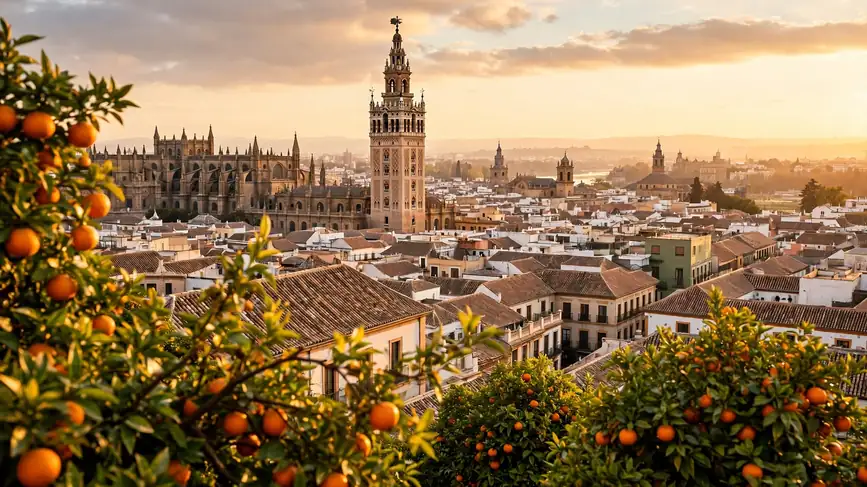
The first time I walked into Seville’s old quarter, I had no plan. Orange trees lined the streets, somebody was playing guitar two alleys over, and the air smelled like warm bread and jasmine. I figured I’d see a couple of sights and move on. Three days later I was still there, and I was already looking at flights back. That’s how the best things to do in Seville sneak up on you.
That’s Seville. It doesn’t hit you over the head like Barcelona or Madrid. It works on you slowly. If you’re trying to figure out the best things to do in Seville, this guide covers the big landmarks, the smaller pleasures, and a few practical lessons I learned by getting things wrong.
First, a Quick Feel for the City
Seville is the capital of Andalusia, in southern Spain, and it sits on the Guadalquivir River. It’s hot. I mean properly hot in summer, with temperatures that regularly push past 40°C (104°F). Spring and autumn are the sweet spots, and I’ll come back to timing later. If you’re choosing the best things to do in Seville, start here.
The city is also very walkable. Most of what you want to see sits inside a compact area, so you can park the idea of renting a car. Comfortable shoes matter far more than a rental booking.
1. Step Inside the Real Alcázar
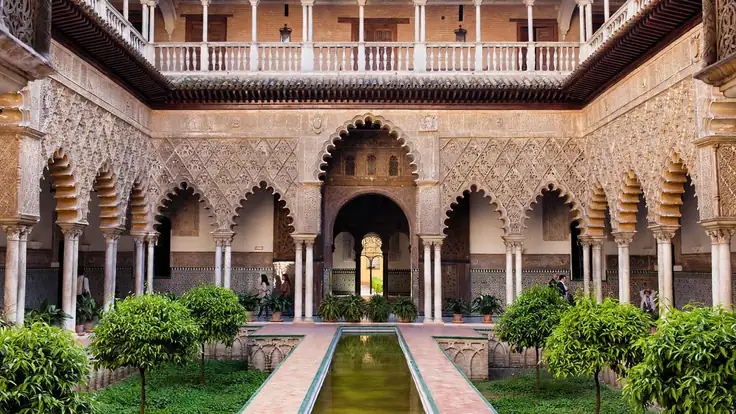
If you only have time for one thing, make it the Real Alcázar. This royal palace has been used by Spanish monarchs for centuries, and it’s still an official residence of the royal family today. What makes it special is the Mudéjar style, a blend of Islamic and Christian design that you just don’t find in many other places.
The Court of the Maidens, with its reflecting pool and carved arches, is the part people photograph the most. But honestly, the gardens are where I lost track of time. There are peacocks wandering around, hidden fountains, and shaded corners where you can sit and cool off.
Fans of Game of Thrones may recognize it, since the palace stood in for the Water Gardens of Dorne.
Tip: Book your ticket online ahead of time. The queue at the gate can get painfully long, especially in spring.
Also read: Best Cities to Visit in Europe: 18 Places Worth the Flight
2. Climb the Giralda and See the Cathedral
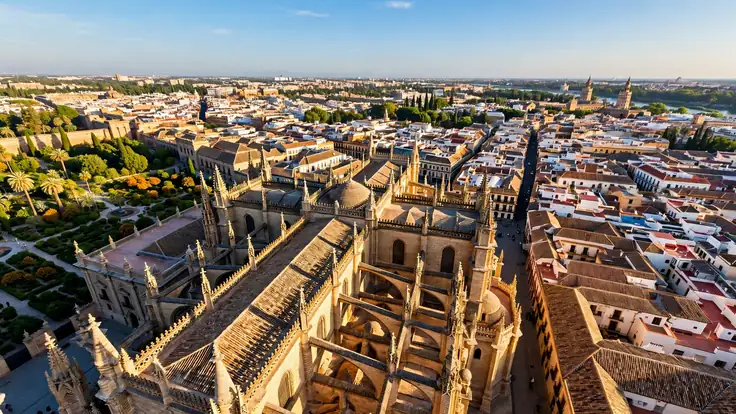
Right next to the Alcázar stands the Seville Cathedral, one of the largest Gothic cathedrals in the world. Inside, you’ll find the tomb said to hold the remains of Christopher Columbus, carried by four huge figures representing the old kingdoms of Spain.
The bell tower, the Giralda, started life as a minaret. Instead of stairs, it has 35 gentle ramps, built so that guards could ride a horse to the top. The climb isn’t bad at all. At the top, you get a full view of the city’s rooftops, and it’s the best way to understand how the old town is laid out. It’s one of the best things to do in Seville at golden hour.
Also read: Best Things to Do in Barcelona: 35 Unforgettable Experiences for 2026
3. Get Lost in Barrio Santa Cruz
This is the old Jewish quarter, and it’s where the city feels most like a postcard. Narrow lanes, whitewashed walls, balconies full of flowers, tiny squares with a single orange tree in the middle.
My advice is simple: put your phone away for an hour and wander. Some alleys are so tight that two people can barely pass each other. You’ll find small tapas bars, ceramic shops, and the kind of quiet courtyard you’d never find on purpose.
It does get busy in the middle of the day. Early morning or after sunset is much more pleasant.
4. Marvel at Plaza de España
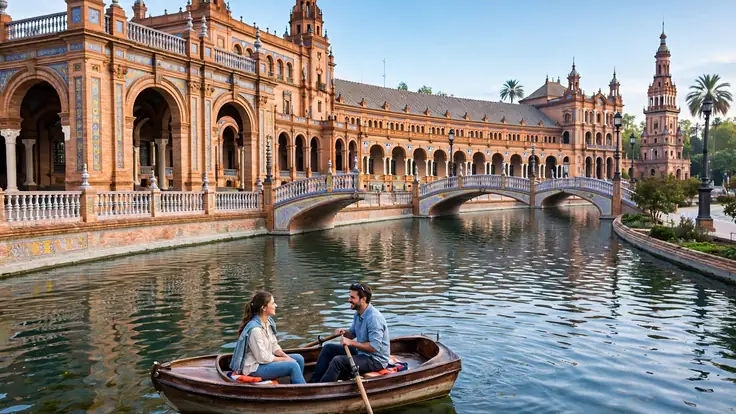
Built for the 1929 Ibero-American Exposition, Plaza de España is a huge semicircular plaza with a canal running through it, a series of bridges, and tiled alcoves that represent every province of Spain. Each one is decorated with colorful ceramic tilework. If you’re shortlisting the best things to do in Seville, don’t skip it.
You can rent a little rowboat and paddle around the canal. It’s a bit touristy, but it’s also great fun, and I’d do it again. Film buffs might recognize the place from Star Wars: Attack of the Clones.
Also read: Best Things to Do in Tokyo: 40 Unforgettable Experiences
5. Rest in Parque de María Luisa
Right beside Plaza de España you’ll find María Luisa Park, the city’s green lung. Shaded paths, fountains, pavilions, and flocks of doves make it one of the nicest places to slow down. It’s popular with locals who come to cycle, jog, or just sit on a bench with an ice cream.
If the midday heat is wearing you down, this is where I’d head. It’s genuinely several degrees cooler under all those trees.
6. Watch a Live Flamenco Show
Seville is one of the birthplaces of flamenco, and seeing it here feels very different from seeing it anywhere else. The best shows happen in small venues called tablaos, where the stage is only a few feet from your seat. You can see the dancer’s face, hear the foot-stamping, and feel the guitar in your chest.
A word of honesty: some shows are very polished and aimed squarely at tourists, while others are raw and emotional. If you can, choose a smaller venue with a limited audience. It’s less glossy, but it’s the real thing.
The Triana neighborhood, across the river, has deep flamenco roots, so it’s a good area to look.

Also read: Best Things to Do in Warsaw: 25 Unmissable Experiences for 2026
7. Eat Your Way Through the Tapas Bars
You can’t talk about Seville without talking about food. The city takes tapas seriously, and it’s actually said to be where the tradition began.
Things worth ordering:
- Jamón ibérico, thin slices of cured ham that practically melt
- Salmorejo, a thick, chilled tomato soup, smoother and creamier than gazpacho
- Espinacas con garbanzos, a Sevillian classic of spinach and chickpeas
- Pringá, slow-cooked meat piled into a small bread roll
- Solomillo al whisky, pork tenderloin in a garlicky whisky sauce
Do what the locals do and hop between several bars rather than sitting down for one big meal. Order one or two plates at each, have a small drink, then move on.

Also read: Best Things to Do in Soho London: 30 Unmissable Ideas for Every Kind of Visitor
8. See the City from the Setas (Metropol Parasol)
Seville is full of old things, so the Metropol Parasol comes as a surprise. Locals call it Las Setas, “the mushrooms,” because that’s what it looks like. It’s a giant wooden structure with walkways on top, and it’s one of the largest wooden buildings in the world.
Go up around sunset. The view over the old town as the light turns orange is hard to beat, and it’s a lot less crowded than the Giralda. Watching the sunset is one of the simplest things to do in Seville, and one of the best.
Underneath, there’s a small archaeological museum with Roman ruins found during construction.
9. Cross the River to Triana
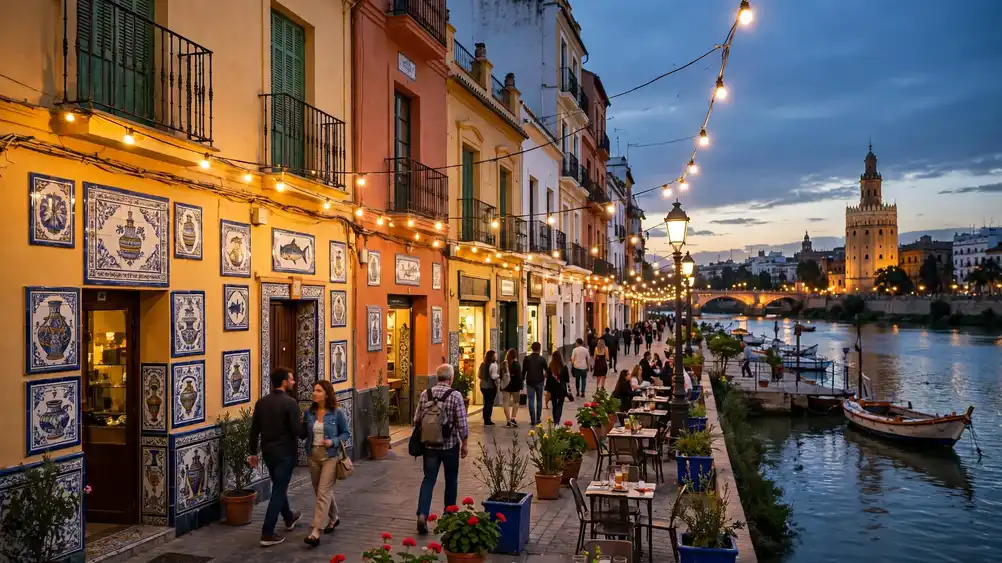
Triana has a different character from the old center. It’s historically a neighborhood of sailors, potters, and flamenco artists, and it still feels a little more local and a little less polished.
Walk along Calle Betis for river views, stop by the Triana Market for fresh food, and look for the ceramic shops, since the neighborhood is known for its tilework. It’s a good place to eat dinner too, and prices tend to be a bit friendlier.
Also read: Things To Do In Rome That Will Make You Fall Completely In Love With The Eternal City
10. Visit Casa de Pilatos
This one is often overlooked, which is a shame. Casa de Pilatos is a 16th-century palace that mixes Mudéjar, Gothic, and Renaissance styles. It has the tilework and arches of the Alcázar, but with a fraction of the crowd.
If you love interior details like patterned tiles, carved ceilings, and small fountains in sunny courtyards, you’ll spend a long time here.
Other Ideas If You Have More Time
- Torre del Oro: A riverside watchtower from the 13th century with a small maritime museum inside.
- Archivo General de Indias: A grand building holding documents about Spain’s colonial history. Entry is generally free, which is a nice bonus.
- Museo de Bellas Artes: One of Spain’s best art museums, strong on Baroque painters like Murillo and Zurbarán.
- Day trip to Itálica: Roman ruins just outside the city, including a remarkably intact amphitheater.
- Day trip to Córdoba or Jerez: Both are easy to reach by train and add a lot of variety.
When Is the Best Time to Visit?
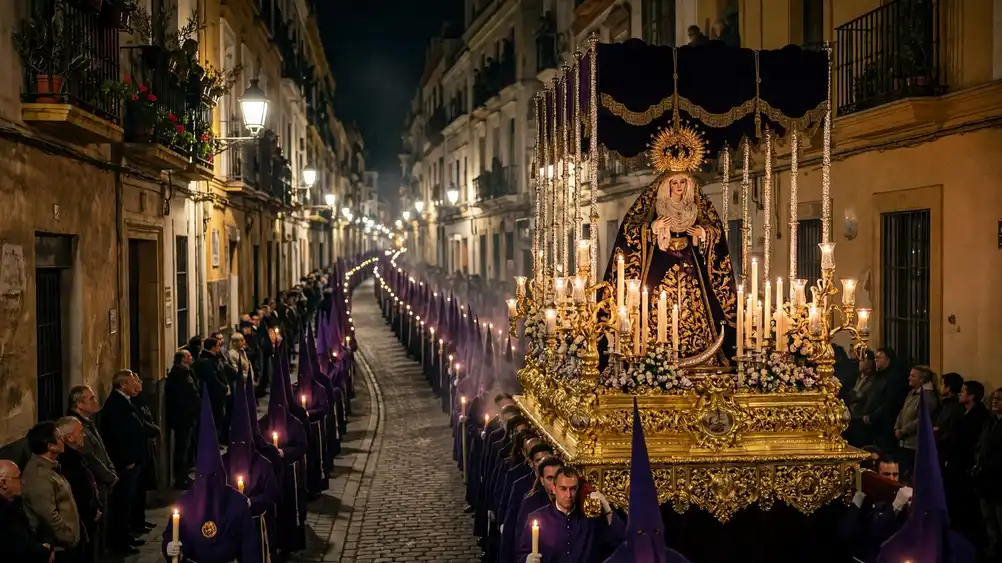
Spring is magical. March through May brings mild weather, blooming orange trees, and the city’s two biggest festivals. Semana Santa (Holy Week) features solemn, dramatic religious processions. Feria de Abril is the opposite, a week of dancing, sherry, and horse-drawn carriages. That’s when the best things to do in Seville really come alive.
Both are wonderful, and both are packed. If you plan to go, book your accommodation very early, because prices climb quickly.
Autumn is also lovely, with warm days and fewer crowds. I’d avoid July and August unless you really enjoy extreme heat. Many locals leave the city during those weeks. Whenever you visit, the best things to do in Seville are worth more than a rushed afternoon.
A Few Practical Tips
- Book big sights ahead. The Alcázar and the cathedral both sell out at busy times.
- Eat late. Lunch is often around 2 p.m. and dinner after 9 p.m. Restaurants may be nearly empty at 7.
- Plan your day around the heat. Do your sightseeing in the morning, rest in the afternoon, and go back out in the evening, the way locals do.
- Wear comfortable shoes. The old cobblestones are charming and unforgiving.
- Stay in or near the center. You’ll save time and energy, and you can walk back for a siesta.
- Carry a water bottle. Fountains and cafés are everywhere, but you’ll still want your own.
Frequently Asked Questions
How many days do you need in Seville?
Two full days will cover the main highlights. Three is more comfortable and lets you add Triana, a flamenco show, and some slow wandering.
Is Seville worth visiting?
Absolutely. It combines monumental history, great food, and a relaxed atmosphere in a compact, easy-to-navigate city.
Is Seville expensive?
Compared with many Western European cities, it’s reasonably affordable, especially for food and drinks. Accommodation gets more expensive during festivals.
Can you do Seville on a budget?
Yes. Many tapas bars are inexpensive, the Archivo de Indias is free to enter, and simply walking the old town costs nothing.
What should I wear?
Light, breathable clothes. Cover your shoulders and knees when visiting the cathedral, since it’s a religious site.
Final Thoughts
Seville isn’t a city you rush through. It rewards people who slow down, linger over a second glass of wine, and take a wrong turn on purpose. See the Alcázar, climb the Giralda, eat far too many tapas, and let the rest happen on its own.
If I could give you one piece of advice, it’s this: leave a little empty space in your schedule. Some of my best memories there were things I never planned.