
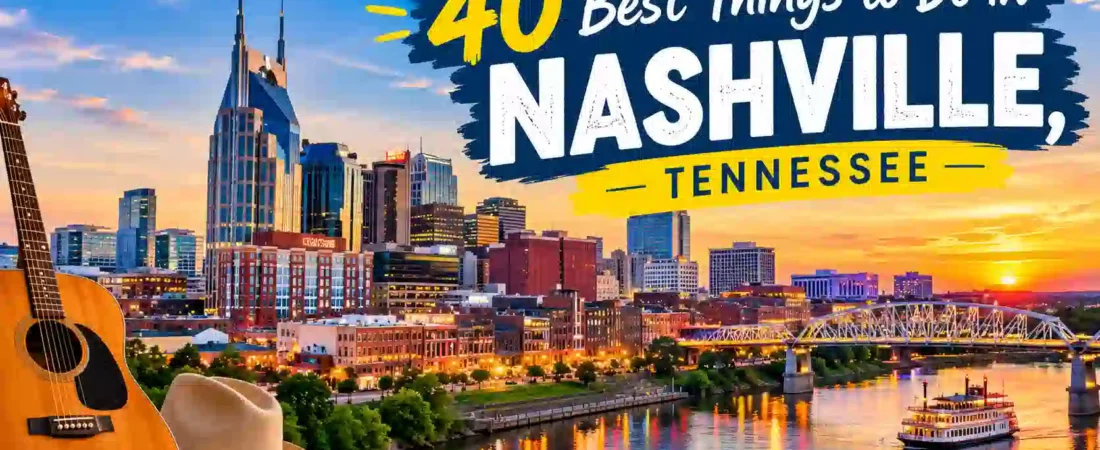
Nashville has a way of getting under your skin. You arrive thinking you’ll spend a weekend listening to a bit of country music, eat some fried chicken, and head home. Then you’re standing in a tiny room in Green Hills, watching a songwriter play a song they wrote last week, and you realize you’ve been quiet for twenty minutes because you didn’t want to miss a word.
That’s the thing about this city. Yes, it’s loud, neon-lit, and full of bachelorette parties in matching cowboy hats. But underneath the spectacle is a place that takes craft seriously, whether the craft is songwriting, cooking, distilling, or building a guitar.
Also Read : Best Time to Visit Salem for Halloween (2026): Weeks, Crowds and the 400th Anniversary
Quick Facts Before You Plan
Nickname: Music City
State: Tennessee
Known for: Country music, hot chicken, honky-tonks, whiskey, songwriting
Best for: Couples, friend trips, music lovers, food lovers, history fans, families with older kids
Getting around: Rideshare, walking in the core areas, rental car for parks and day trips
Ideal trip length: 3 to 4 days
Nashville is more spread out than it looks on a map. Downtown, the Gulch, Midtown, and Germantown are close enough to link together. East Nashville, 12South, Green Hills, and Opryland sit further out. If you plan to see several of them, either budget for rideshares or rent a car. If you’re staying downtown and mostly sticking to Broadway, the Ryman, the museums, and the riverfront, you can happily go without a car.
Best Time to Visit Nashville
Spring (March to May) is lovely. Gardens bloom, the weather is mild, and outdoor patios are open. It’s also busy, since festival and wedding season is in full swing.
Summer (June to August) is hot and sticky. You’ll want indoor attractions in the afternoon and outdoor plans in the morning or evening. Honky-tonks are packed, but the energy is fantastic.
Fall (September to November) is arguably the best window. Temperatures settle, the leaves turn in the parks, and the evenings are ideal for rooftop bars and sunset bridge walks.
Winter (December to February) is quieter and cheaper. It can be chilly, but the holiday lights and cozy music rooms make up for it. Some of the best songwriter shows are easiest to book in winter.
If you hate crowds, aim for a Tuesday to Thursday visit. Weekends on Lower Broadway can feel like a street party you’re not quite dressed for.
Music and Entertainment
This is why most people come, so we’ll start here.
1. Hop Between the Honky-Tonks on Lower Broadway

Walk down Lower Broadway on any night and you’ll hear five different bands at once, spilling out of open doors, each one playing for tips. This stretch is the beating heart of tourist Nashville, and it’s genuinely fun if you go in with the right expectations.
Tootsie’s Orchid Lounge is the famous purple building, and it’s worth a quick look for the history even if the line is long. Robert’s Western World, a few doors down, is a favorite among people who prefer traditional country over pop-country covers. Layla’s and The Stage are good for a rowdy night. Most places have no cover charge, but you’re expected to buy a drink and tip the band.
My honest advice is to go in the afternoon, when the music is already live, the crowds are smaller, and you can actually find a seat. Then return for one lap at night to feel the full chaos. Keep your expectations realistic about authenticity, but not about talent. The musicians playing for tips on Broadway are often remarkably good, and many are working songwriters.
2. Catch a Show at the Grand Ole Opry
The Opry is the longest-running live radio show in American history, with broadcasts that began back in 1925. Today it’s held at the Grand Ole Opry House, a short drive east of downtown, near the Opryland area. A show is a mix of legends, current stars, and rising newcomers, all sharing one stage in short sets.
What makes it special isn’t just the lineup, it’s the feeling. Artists treat standing on the Opry stage like a rite of passage. Many tell stories between songs that you’ll never hear at a regular concert. There’s a circle of wood on the stage floor, cut from the Ryman Auditorium’s original stage, where performers stand. Seeing someone step into it is a small but moving moment.
If you can’t get a show ticket, the backstage tour is a very good second option. You see the dressing rooms and learn how the whole thing runs. Book ahead for weekends, since shows can sell out, especially in peak season.
3. Tour the Ryman Auditorium
Nicknamed the “Mother Church of Country Music,” the Ryman opened in the early 1890s as a gospel tabernacle. It later became the Opry’s home for decades and is now one of the most respected concert halls in the world. The pews are original, the acoustics are astonishing, and even a quiet daytime tour feels reverent.
If you can, see an actual concert here instead of just touring. Musicians talk about the Ryman the way other people talk about cathedrals, and you’ll understand why when a single voice and an acoustic guitar fill the whole room without any trouble. The schedule runs well beyond country, so check what’s playing during your dates.
4. Spend a Few Hours at the Country Music Hall of Fame and Museum
Even people who say they don’t like country music tend to leave this museum impressed. It’s well curated, easy to follow, and far more about American storytelling than about twang. You’ll see handwritten lyrics, costumes, instruments, and a famous gold Cadillac, along with exhibits that trace the genre from its roots in folk, blues, and gospel to the present.
Give it at least two to three hours. If you want to see the Hall of Fame Rotunda, where members are honored with bronze plaques, do it toward the end, when you’ve built up a bit of context. Pair it with a tour of the nearby RCA Studio B, which is run through the museum.
Must Read : Things to Do in Charlottetown: 25 Best Attractions, Eats and Day Trips
5. Visit RCA Studio B
Opened in the late 1950s, this modest-looking studio was where Elvis Presley, Dolly Parton, Roy Orbison, and many others recorded hits. Walking into the room, you notice how small it is. That’s the surprise. So many famous songs came from a space the size of a large living room.
The guided tour includes stories you won’t get from a plaque, and sometimes a short recording demonstration. It’s a quick, atmospheric stop for anyone who loves music history. Tours generally depart from the Country Music Hall of Fame, so buy tickets through the museum.
6. Pop into the Johnny Cash Museum
Smaller and more personal than the Hall of Fame, this downtown museum is dedicated to the Man in Black. It holds a large private collection of memorabilia, handwritten letters, and personal items. You can easily see it in about an hour.
It’s a good pick if you have limited time but want something with real emotional weight. Cash fans will love the detail, and casual visitors will leave with a better understanding of why he mattered beyond the songs.
7. Listen to Songwriters at the Bluebird Cafe
The Bluebird sits in a plain strip mall in Green Hills and holds fewer than a hundred people. You’d never guess from the outside that this is one of the most famous listening rooms in the world. Songwriters take turns performing their songs, often “in the round,” trading verses and stories.
The rule is simple: you listen. Talking during a set is frowned upon, and the staff means it. Tickets often go on sale in advance through the venue’s website and can be competitive, so plan ahead. If the Bluebird doesn’t work out, there are other excellent songwriter rooms around town, and I’d honestly point you to a few of them as an equally good night out.
8. Experience Bluegrass at the Station Inn
If Broadway is flashy, the Station Inn is the opposite. This humble room in the Gulch has hosted bluegrass players since the 1970s. The benches aren’t fancy, the lighting is simple, and the picking is world class. Expect fast banjo runs, tight harmonies, and a crowd that actually listens.
It’s a great reminder that Nashville’s musical identity is wider than modern country. Go with an open mind, buy a drink, and let it surprise you.
9. Learn Something at the National Museum of African American Music
Opened in 2021 and located downtown, this museum tells the story of how African American artists shaped nearly every American genre, including gospel, blues, jazz, R&B, soul, and hip-hop. The exhibits are interactive, and you’re encouraged to sing, tap, and move.
It adds a layer that many visitors miss: Nashville’s music story didn’t begin or end with country radio. Spend a couple of hours here, and the rest of your trip will feel richer.
10. See the Musica Statue and Wander Music Row
Music Row is a quieter stretch of the city, lined with converted houses that hold record labels, publishing companies, and studios. It’s not a tourist attraction in the usual sense, but a slow walk or drive gives you a feel for where the business actually happens.
At the roundabout, you’ll find the large Musica sculpture, a cluster of nude dancing figures that people love to photograph. Combine this with a coffee stop nearby, and you’ve had a free, offbeat hour.
11. Watch a Predators Game at Bridgestone Arena
Hockey in the South sounds odd until you go. The Nashville Predators have one of the loudest home crowds in the NHL, and the arena is a spectacle on game night. Even if you’ve never watched hockey, the atmosphere is infectious. The arena also hosts major concerts, so check the calendar for both.
12. Walk Through the Gaylord Opryland Resort
This sprawling resort has several acres of indoor gardens, waterfalls, and even a little river with boats. It’s over the top in the best way, especially during the holiday season when the lights and decorations go all out. You don’t have to be a guest to stroll through the public areas, though parking and rules can vary.
It makes a good rainy-day plan and pairs well with the Opry.
History and Culture

13. Marvel at the Parthenon in Centennial Park
Yes, there’s a full-scale replica of the Greek Parthenon in Nashville. It was originally built for Tennessee’s centennial celebration in the late 1890s and later rebuilt in permanent materials. Inside, you’ll find a towering statue of Athena, nearly 42 feet tall and covered in gold leaf, along with an art gallery in the lower level.
The surrounding park is lovely for a stroll, with a small lake, shady paths, and plenty of benches. It’s a reliable stop for photos, picnics, or an easy, free wander. Go in the late afternoon for softer light.
14. Visit The Hermitage, Andrew Jackson’s Home
The Hermitage was the home of the seventh U.S. president. The estate includes the mansion, gardens, a museum, and the grounds where hundreds of enslaved people lived and worked. Guided and self-guided options explore both Jackson’s political legacy and the lives of the people he enslaved, and the site doesn’t shy away from that difficult history.
It’s about 20 to 30 minutes from downtown. If you only have time for one historic house, this is a strong choice, particularly for visitors who want context rather than a purely decorative tour.
15. Step Back in Time at Belle Meade Historic Estate
Belle Meade was once a famous thoroughbred horse farm. The Greek Revival mansion, restored outbuildings, and winery tell the story of a Southern estate through the lens of wealth, horses, and, importantly, the enslaved people whose labor sustained it. Tours are guided, and the quality of the guide makes a big difference, so ask about the schedule.
It’s a nice option if you want history combined with a relaxed, scenic setting, and you can follow it with a tasting at the on-site winery.
Must Read : Best Places to Visit in December: 28 Destinations for Snow, Sun, Festive Markets and Fresh Starts
16. Tour the Tennessee State Capitol
Perched on a hill downtown, this 19th-century Greek Revival building is one of the oldest working state capitols in the country. It was designed by architect William Strickland, who is actually buried inside the building.
Self-guided visits are often possible on weekdays, and the views over downtown from the grounds are excellent. Check the visiting rules, since access can depend on legislative activity.
17. Walk the Bicentennial Capitol Mall State Park
At the foot of the Capitol hill, this park is a clever outdoor history lesson. The Pathway of History, the Court of Three Stars, a large granite map of the state, and a carillon tell the story of Tennessee in a way that’s easy to follow with kids or friends. It’s free, shaded in places, and pairs well with the Nashville Farmers’ Market next door.
18. Explore the Tennessee State Museum
This museum covers everything from the earliest inhabitants of the region to the Civil War, the Civil Rights era, and modern Tennessee. Admission has long been free, which makes it one of the best value stops in the city. Plan for about two hours.
19. Trace the Civil Rights Movement at the Nashville Public Library
Nashville played a pivotal role in the sit-in movement of 1960. Students from local colleges, trained in nonviolent protest, helped desegregate downtown lunch counters. The Civil Rights Room inside the downtown public library tells that story with powerful photographs, and it’s free to enter. Nearby Church Street was one of the sites of those sit-ins.
If you want to go deeper, Fisk University and other local historical sites connect to this story as well. Fisk is also the home of the Jubilee Singers, whose touring in the 1870s helped bring spirituals to the world.
20. See Art at the Frist Art Museum
Housed in a gorgeous Art Deco former post office, the Frist doesn’t keep a permanent collection. Instead, it hosts rotating exhibitions from around the world. That means there’s always something new, and it’s a great rainy-day stop. The building itself is worth a look.
21. Stroll Through Cheekwood Estate and Gardens

On the western side of the city, Cheekwood combines a historic mansion, art exhibits, and about 55 acres of botanical gardens. In spring, the tulips and blossoms are spectacular. Around the holidays, seasonal light displays draw big crowds.
It’s one of my favorite quiet escapes in Nashville, and a great choice for couples, garden lovers, or anyone who needs a break from loud music and crowds. Give yourself two to three hours.
Outdoors and Parks
22. Walk Across the John Seigenthaler Pedestrian Bridge
This long pedestrian bridge crosses the Cumberland River and connects downtown to East Nashville. It started life in the early 1900s as a car bridge, and is now a car-free walkway with views of the skyline, the river, and Nissan Stadium.
Go at sunset. The city lights come on as the sky changes color, and you’ll see runners, couples, and photographers all sharing the same view. It’s free, it takes about 20 minutes each way, and it’s one of the most rewarding things to do in Nashville without spending a cent.
23. Hike or Bike Radnor Lake State Park
Just south of the city, Radnor Lake is a protected natural area with wooded trails, a quiet lake, and plenty of wildlife. You might spot deer, herons, turtles, and, if you’re lucky, owls. It’s ideal for a gentle morning walk, and parking can fill up early on weekends, so arrive at a sensible hour.
24. Explore Percy Warner and Edwin Warner Parks
These two connected parks make up one of the largest city park systems in the region. They offer miles of hiking trails, horse paths, picnic areas, and a scenic road popular with cyclists. If you rent a car or love a long run, this is the place to burn off a Nashville hot chicken lunch.
25. Walk the Shelby Bottoms Greenway
This riverside greenway on the east side has paved and natural trails, wildlife, and open meadows. It’s relaxed and great for biking. Pair it with a morning in East Nashville, and you’ve got a very local-feeling day.
26. Relax at Cumberland Park
Right at the foot of the Seigenthaler Bridge on the East Nashville side, this riverfront park has a playground and good views back toward downtown. It’s an easy stop for families or anyone who wants to look at the skyline from the opposite bank.
27. Cruise the Cumberland River
Riverboat cruises, including paddlewheel experiences with dinner and live music, offer a calm way to see Nashville from the water. It’s a gentle, slightly nostalgic activity that works well for couples and groups with mixed interests.
28. Paddle on Percy Priest Lake
If you’re visiting in warm weather and want to get on the water, Percy Priest Lake is a short drive from downtown. Stand-up paddleboarding, kayaking, and boating are all popular. Local outfitters offer lessons and rentals, which is a good choice if you’re new to the water.
Food and Drink

29. Eat Authentic Nashville Hot Chicken
Hot chicken is Nashville’s signature dish. It’s fried chicken coated in a spicy cayenne paste and served on white bread with pickles. Prince’s Hot Chicken is often credited as the original, with a story that goes back to the 1930s. Hattie B’s and Bolton’s are also well loved.
My advice: order one level lower than your ego wants. The heat builds, and what feels manageable on the first bite can be overwhelming by the third. Keep milk or sweet tea nearby, and don’t wear white.
Read Also : Beautiful Places in Lazio, Italy: Stunning Towns, lakes,islands and Gardens Beyond Rome
30. Try a Southern Meat-and-Three
A meat-and-three is a Southern lunch tradition where you pick a main and three sides, such as fried chicken with mac and cheese, collard greens, and fried okra. Arnold’s Country Kitchen is a famous example, and Monell’s is known for its family-style meals. These are hearty, affordable, and deeply tied to local food culture. Go hungry, and go early, because lines form at lunchtime.
31. Browse the Nashville Farmers’ Market
This year-round market combines fresh produce, local makers, and an indoor food hall with global flavors. It’s an excellent place for a casual lunch, a snack, or a few edible souvenirs. It’s also a short walk from the Bicentennial Capitol Mall State Park, so you can combine the two.
32. Brunch Like a Local
Nashville takes brunch seriously. Expect biscuits, sweet and savory pancakes, and generous Bloody Marys. Popular spots fill up on weekends, so join waitlists early or aim for a late weekday brunch. Biscuit Love, with its famous “bonuts,” has become a landmark for good reason.
33. Sip Whiskey at a Local Distillery
Tennessee whiskey has a distinct charm. Jack Daniel’s is a bit of a drive away in Lynchburg, but Nashville has its own spots. Nelson’s Green Brier Distillery brings back a brand with a long history and offers tours and tastings in a historic setting. Corsair is another well-known name for creative small-batch spirits. If you like cocktails, you’ll find plenty of skilled bartenders around town.
34. Hunt Down a Speakeasy in Printers Alley
Printers Alley is a narrow, historic downtown lane that once housed newspaper presses and later became a hub for nightlife. Today you’ll find bars, lounges, and a few hidden spots. It’s atmospheric, especially at night, and feels a world away from the noise of Broadway.
35. Try a Local Brewery
Craft beer fans have lots to explore, from Yazoo Brewing Company, one of the city’s earliest craft breweries, to newer taprooms across neighborhoods. Many have patios, food trucks, and a casual feel, which makes them good places to cool off after a day of walking.
36. Go Rooftop Bar Hopping
The skyline view is a big part of Nashville’s charm, and several downtown and Gulch-area rooftops let you enjoy it with a drink in hand. Go just before sunset, and you’ll catch the city at its best. Weekend nights can bring long lines, so arrive early.
Neighborhoods Worth Exploring
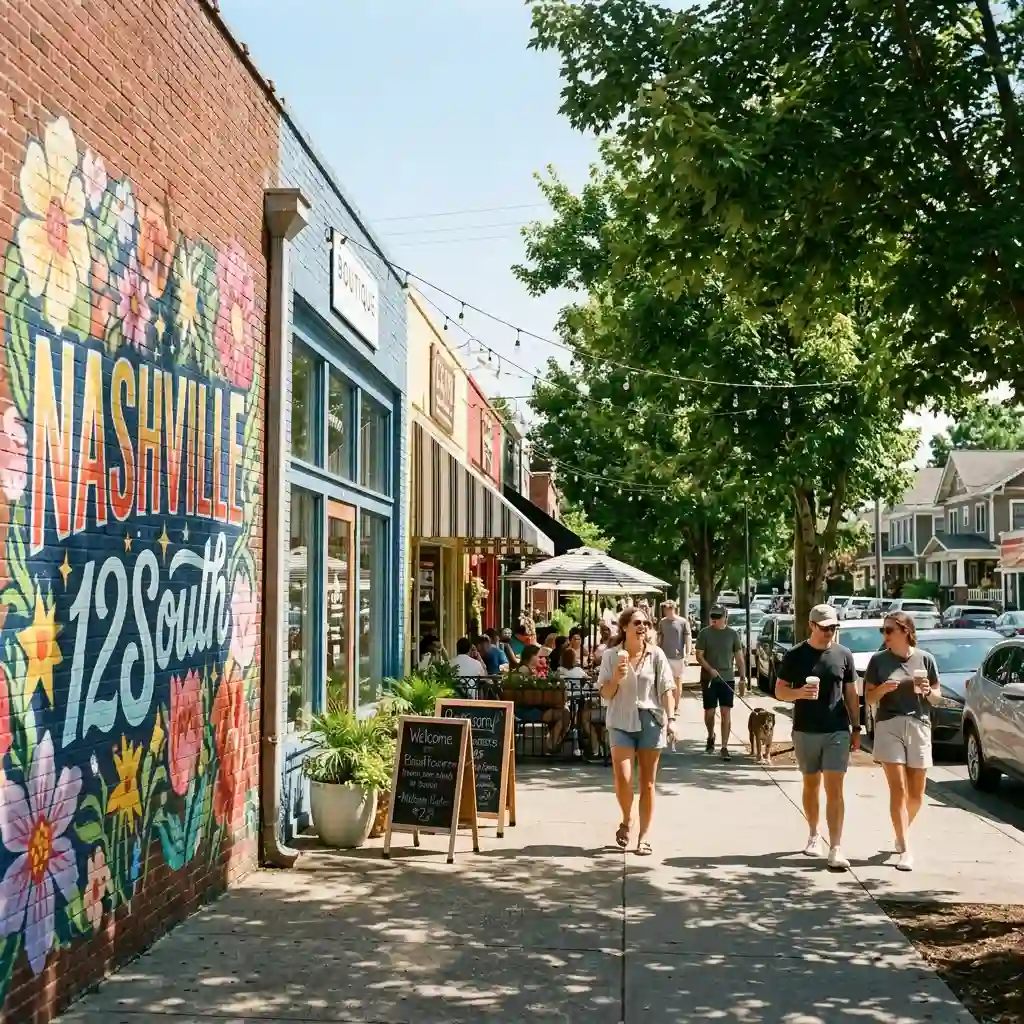
Instead of trying to see everything, pick two neighborhoods per day. Here’s how they differ.
37. 12South
A half-mile stretch of shops, cafes, and restaurants, 12South is one of the most walkable and photogenic neighborhoods in the city. You’ll find the famous “I Believe in Nashville” mural here, boutiques, ice cream, and good coffee. It’s relaxed, family-friendly, and ideal for an afternoon wander.
38. The Gulch, Germantown, and East Nashville
The Gulch is stylish and modern, with rooftop bars and the famous “What Lifts You” wings mural, a popular photo stop. Germantown is Nashville’s oldest neighborhood, with brick buildings, excellent restaurants, and a historic feel. East Nashville is creative and independent, with small shops, music venues, and a strong local identity. If you want a more relaxed, less touristy side of the city, East Nashville is a great choice.
Hillsboro Village and Wedgewood-Houston are also worth a look if you have extra time. Hillsboro Village is a classic college-adjacent strip with cafes and a historic theater, and Wedgewood-Houston is where you’ll find galleries and creative studios.
Shopping and Souvenirs
39. Shop for Boots, Hats, and Guitars
No Nashville trip is quite complete without trying on a pair of cowboy boots. Lower Broadway has several large boot stores, and many offer buy-one-get-one deals. For something more refined, look for local shops with custom or higher-quality options. If you play guitar, stop by a vintage dealer such as Gruhn Guitars, where even just looking is a treat.
Local souvenirs worth a look include hot sauce, small-batch chocolate, handmade candles, and art prints. Marathon Village, a restored former auto factory complex, hosts independent shops and has a quirky, industrial charm.
40. Hunt for Murals
Nashville has more than a hundred murals, and a photo hunt makes a fun, free activity. The “What Lifts You” wings, the “I Believe in Nashville” mural in 12South, and countless pieces in East Nashville and Germantown make a great self-guided route
Read Must : Best Things To Do In Curacao That Will Make You Extend Your Flight Home
Family-Friendly Things to Do
Nashville isn’t just for adults on weekend trips. If you’re traveling with kids, consider these:
Nashville Zoo at Grassmere: A well-regarded zoo with a large play area, set on a historic property.
Adventure Science Center: Hands-on exhibits and a planetarium, ideal for rainy days.
Nashville Shores: A lakeside water park that’s a good pick in summer.
Centennial Park: Open space, a playground, and the Parthenon, all in one.
Cumberland Park: An interactive riverfront playground with skyline views.
Nashville Sounds baseball: A relaxed family evening at the ballpark.
If your kids are younger, skip Lower Broadway at night. It’s loud and adult-oriented. Daytime visits are more manageable.
Day Trips from Nashville
Franklin
About 20 to 30 minutes south, Franklin has a beautifully preserved historic downtown with boutiques, cafes, and Civil War history, including nearby battlefield sites such as Carnton. It’s a lovely half day.
Leiper’s Fork
A small, artsy village with galleries, shops, and live music, Leiper’s Fork is a laid-back change from the big city. It’s a nice drive, too.
Lynchburg and the Jack Daniel’s Distillery
Roughly 90 minutes away, Lynchburg is home to the Jack Daniel’s Distillery. Tours cover the story of Tennessee whiskey. Check the current tour rules, including how tastings work in the local county.
Arrington Vineyards
If you like wine and open scenery, this vineyard south of Nashville offers tastings and a relaxed Southern afternoon.
Sample Itineraries
One Day in Nashville
Morning: Start at the Country Music Hall of Fame, then walk through the Johnny Cash Museum.
Lunch: Try hot chicken downtown or in the Gulch.
Afternoon: Tour the Ryman Auditorium.
Evening: Walk the Seigenthaler Bridge at sunset, then enjoy a lap through Broadway’s honky-tonks.
Two Days in Nashville
Day 1: Follow the one-day plan above.
Day 2 morning: Visit the Parthenon and Centennial Park.
Day 2 lunch: Head to 12South for a casual meal and a stroll.
Day 2 afternoon: Explore Belle Meade or Cheekwood.
Day 2 evening: Catch a songwriter show at the Bluebird Cafe or similar.
Three Days in Nashville
Day 3 morning: Head to the Hermitage or take a morning hike at Radnor Lake.
Day 3 lunch: Enjoy a meat-and-three.
Day 3 afternoon: Explore East Nashville and Marathon Village.
Day 3 evening: See a show at the Opry, or catch a bluegrass set at the Station Inn.
Practical Tips for First-Timers
Book the big ones early. The Bluebird Cafe, Opry shows, and popular tours can sell out well in advance.
Wear comfortable shoes. You’ll walk more than you expect, especially downtown.
Tip the bands. Musicians on Broadway play for tips, so keep small bills handy.
Don’t try to do everything. Nashville rewards slow travel. A relaxed afternoon in a neighborhood is better than a rushed checklist.
Check event calendars. Big events, including concerts, sports, and festivals, can affect hotel prices and traffic.
Stay safe and aware. Like any busy downtown, stay alert at night, keep your belongings close, and plan how you’ll get home.
Ask locals for recommendations. Nashville is friendly, and bartenders, musicians, and shop owners often give the best tips.
Frequently Asked Questions
What is Nashville best known for?
Nashville is best known for country music, its live music scene, hot chicken, Southern food, and historic venues like the Grand Ole Opry and the Ryman Auditorium.
How many days do you need in Nashville?
Three to four days is ideal for first-timers. Two days is enough for the highlights if you plan carefully.
What are the best free things to do in Nashville?
Walk the Seigenthaler Pedestrian Bridge, explore Centennial Park, visit the Civil Rights Room at the public library, wander the Bicentennial Capitol Mall State Park, stroll through murals, and enjoy live music on Broadway (tipping encouraged). The Tennessee State Museum has also been free to enter.
Is Nashville walkable?
Downtown, the Gulch, and parts of Midtown are walkable. Neighborhoods like 12South and East Nashville are walkable once you’re there, but you’ll need a ride to get between areas.
What should I wear in Nashville?
Dress casually and comfortably. Boots are fun but not required. Layers are smart in spring and fall, and light breathable clothing helps in summer.
Is Lower Broadway worth it?
Yes, for a visit or two. It’s loud and touristy, but also exciting and full of talent. Go in the afternoon for a calmer experience and at night for the full show.
When is the cheapest time to visit?
Late January to early March is generally the cheapest, aside from special event weekends.
Is Nashville good for families?
Yes. The zoo, science center, parks, and water park make it a good choice, especially during the day.
Final Thoughts
Nashville is one of those rare cities that works on multiple levels. If you only want a weekend of music, food, and fun, it delivers. If you want to dig deeper into history, craft, art, and community, it delivers that too.
The best advice I can give is to leave a little room in your plan. Wander into a side street. Sit at a bar and talk to the person next to you. Say yes when someone recommends a place you’ve never heard of. Some of the best things to do in Nashville aren’t on any list, and that’s exactly why the city keeps drawing people back.
Pack comfortable shoes, bring an appetite, and let Music City surprise you.