

The first time I put my face in the water at a Hawaiian reef, I forgot to breathe properly for about ten seconds. A parrotfish the size of a dinner plate was crunching on coral directly beneath me, a school of yellow tang drifted by like someone had spilled a box of highlighters, and a green sea turtle glided past without so much as a glance in my direction. I surfaced, spat out my mouthpiece, and said something that is not suitable for a travel guide.
That is the thing about snorkeling in Hawaii. It does not take skill, and it does not take a scuba certification. It takes a mask, a little curiosity, and knowing where to go. Hawaii has more than a hundred places where you can float over a living reef, but not all of them are equal. Some are calm enough for a five-year-old. Some turn dangerous the moment a winter swell rolls in. A few need a reservation weeks ahead, and a couple are only worth it if you book a boat.
Must Read : Best Things to Do in Warsaw: 25 Unmissable Experiences for 2026
The best places to snorkel in Hawaii reward a little planning.
This guide gets you to the good stuff quickly. I have gone through the most popular snorkeling guides currently ranking for this topic, checked the official rules that visitors keep tripping over, and organized everything the way a real trip is planned: by island, by skill level, and by season. By the end you will know which spots are best for beginners, where the turtles hang out, which places are worth paying for a tour, and which ones to skip when the surf is up.
Let’s get you in the water.
Quick Picks: The Best Snorkeling in Hawaii at a Glance
If you only have a minute, start here.
| Best for | Spot | Island | Access |
|---|---|---|---|
| Overall best reef | Molokini Crater | Maui | Boat |
| Best for beginners | Hanauma Bay | Oahu | Shore (reservation) |
| Best for turtles | Kahaluʻu Beach Park | Big Island | Shore |
| Best for marine life variety | Kealakekua Bay | Big Island | Boat or kayak |
| Best for families | Poipu Beach Park | Kauai | Shore |
| Best for dolphins and big fish | Electric Beach | Oahu | Shore |
| Best easy shore snorkel on Maui | Kapalua Bay | Maui | Shore |
| Best at night | Manta ray night snorkel | Big Island | Boat |
| Best off-the-radar | Hulopoʻe Bay | Lanai | Shore |
Also Read: Best Oahu Beaches: 10 Stunning Spots Locals Actually Love (2026 Guide)
How I Picked These Snorkeling Spots
A lot of “best of” lists are just a pile of beach names with a stock photo on top. I wanted this one to be genuinely usable, so each spot here had to pass a few tests.
- Marine life you can actually see. Healthy coral, plenty of fish, and a realistic chance at turtles, rays, or dolphins.
- Water conditions. Calm, protected, and clear for a good part of the year, not just on one lucky day.
- Access. I have noted whether you can walk in from shore or need a boat, and whether you need a reservation.
- Safety and rules. Lifeguards, currents, crowding, and any protected-area restrictions.
- Value. Free or cheap options sit next to the “splurge” tours, and I will tell you which tours are worth the money.
One honest caveat: reef conditions, closures, and fees change. Hanauma Bay, for example, had a multi-week closure for sewer repairs in August 2026 and a second one is expected in early 2027, with dates not yet announced. Always check the official park or county page for your date before you drive anywhere.
Read Also: Best Places To Visit In Hawaii For An Unforgettable Island Escape You Will Never Stop Talking About
When Is the Best Time to Snorkel in Hawaii?
Hawaii’s water stays warm all year, roughly 75 to 82°F (24 to 28°C), so you never need to worry about freezing. What changes is the ocean’s mood.
NOAA describes two main seasons here: summer (roughly May through October) and winter (November through April). They behave very differently.
Summer (May to October): the north and east shores shine
Trade winds blow steadily, but the big northern swells go quiet. North-facing and east-facing beaches, such as Kauai’s Keʻe and Anini or Oahu’s Shark’s Cove, flatten into swimming pools. Visibility is usually at its best. If you are choosing between seasons purely for snorkeling, summer wins.
Winter (November to April): head south and west
Big surf pounds the north shores, and those same beaches become dangerous. But the south and west sides of each island, which are sheltered from those swells, stay mellow. Think Poipu on Kauai, Kapalua and Olowalu on Maui, and the whole Kona coast on the Big Island. Winter is also humpback whale season, and you will often hear them singing underwater while you snorkel. It is unforgettable.
Since today is early November, you are right at the seasonal switch. If you are planning a trip over the next few months, lean on the leeward, sheltered spots in this guide.
Best time of day
Go early. Seriously, this is the single best tip in the guide. Mornings usually bring calmer water, less wind, better visibility, fewer people, and more active fish. By early afternoon, trade winds chop up the surface and sunscreen-slicked crowds stir up the water.
One more timing tip: box jellyfish
On leeward beaches, particularly on Oahu’s south shore, box jellyfish tend to wash in about seven to ten days after a full moon. Local lifeguards post warnings. If you see a sign, snorkel somewhere else that day. It is not worth the sting.
Also Read: Famous Places In Hawaii: 85 Plus Unforgettable Spots Every Island Lover Needs On Their List
What You Need Before You Get in the Water
You do not need much, but a few things matter more than people expect.
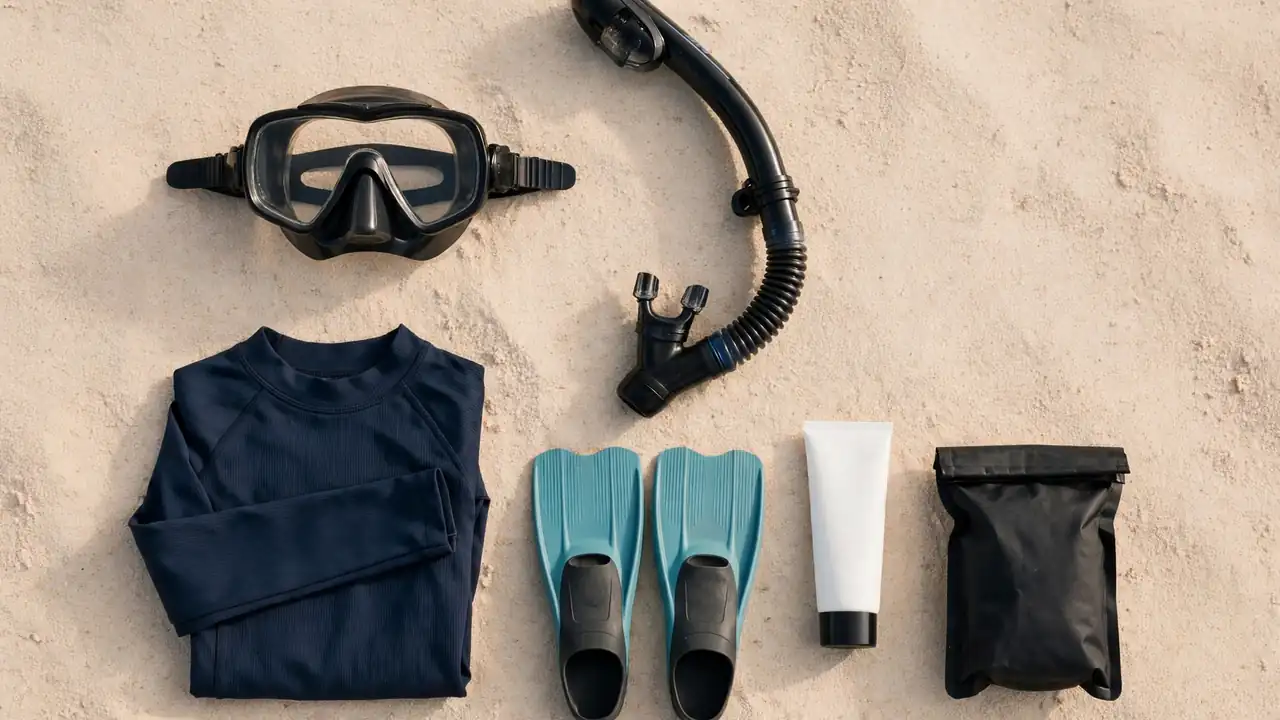
- A mask that actually fits. This is the big one. Press it to your face without the strap, inhale gently through your nose, and let go. If it sticks, it fits. A leaky mask ruins a whole trip.
- A snorkel with a dry top. It keeps splashes out and makes breathing feel effortless for beginners.
- Fins. Short travel fins are easier to carry and fine for most shore snorkeling. Fins also help you avoid kicking the reef, because you can control your speed.
- A rash guard or swim shirt. It protects your back from sunburn better than any lotion, and it means you need less sunscreen in the water.
- Reef-safe sunscreen. Hawaii has banned the sale of sunscreens containing oxybenzone and octinoxate to protect its coral. Choose mineral formulas, and put them on at least 15 minutes before you swim.
- A flotation vest or noodle. There is no shame in it. A vest lets you float with zero effort, which means you spend more energy watching fish than treading water.
Renting vs. buying: if you are snorkeling more than two or three times, a cheap personal set costs about the same as renting, and you will own a mask that fits. If you are only doing it once, rent from a local shop near your hotel. Many shops also let you rent for a full week, which helps if you plan to hop between beaches.
Read Must: Best Things to Do in Warsaw: 25 Unmissable Experiences for 2026
Snorkeling Safety and Reef Etiquette (Read This Part)
Hawaii is gorgeous, but the ocean is not a theme park. A few habits make you safer and keep the reef alive for the next person.
Check conditions before every single swim. Look for lifeguards, read the posted signs, and ask them about surf, current, and jellyfish. If waves are breaking over the reef, stay out.
Never turn your back on the ocean while walking on lava rock. Shorelines here can be sharp and slippery, and a surprise wave can knock you down.
Do not touch, stand on, or kick coral. Coral is a living animal and takes years to recover from damage. If you need a rest, flip onto your back or swim to a sandy patch, never put your feet down on the reef.
Give wildlife space. Green sea turtles (honu) and Hawaiian monk seals are protected under state and federal law. NOAA recommends staying at least 10 feet (3 meters) from turtles and about 150 feet from monk seals. Spinner dolphins should be given roughly 50 yards. Do not chase, touch, or feed any of them. Sea turtles sometimes sleep on the bottom for a while, so give them room to surface for air.
Do not snorkel alone. Even strong swimmers should use the buddy system. Pick a landmark on shore so you can orient yourself, and look up often. Currents can drift you farther than you realize.
Know your limits. Snorkeling is relaxed, but it is still exercise. If you have a medical condition, are pregnant, or have not swum in a while, a lifeguarded beach or a guided tour with a flotation vest is the safer choice.
Also Read: Best Areas to Stay in Seoul: 12 Neighborhoods Compared
Best Places to Snorkel on Oahu
Oahu is where most Hawaii trips begin, and it has some of the easiest snorkeling to fit into a short stay. You also get the contrast of calm bays and legendary surf beaches on one island, so the season really matters here.
1. Hanauma Bay Nature Preserve: the beginner classic
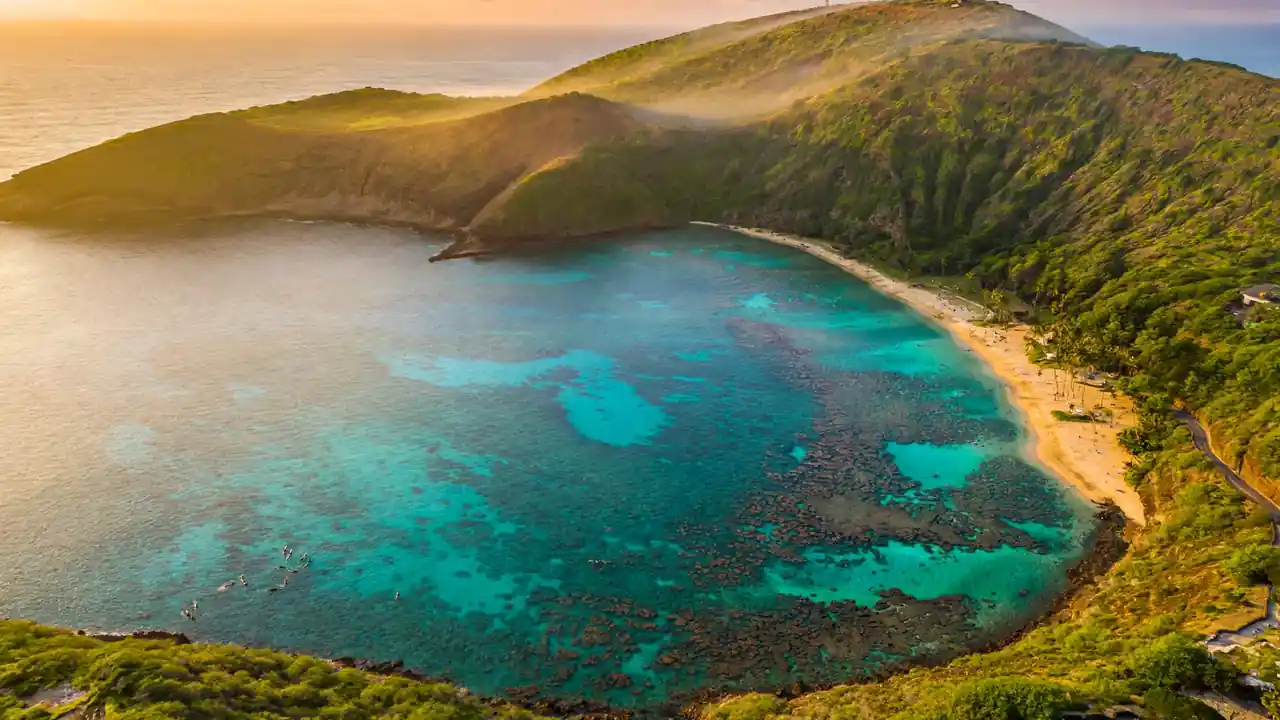
If you picture a postcard of Hawaiian snorkeling, you are probably picturing Hanauma Bay. It is a flooded volcanic crater on Oahu’s southeast shore, with a crescent of sand, shallow protected water, and a reef that starts almost at your feet. It is one of the most beginner-friendly places in the entire state.
What you will see: parrotfish, butterflyfish, Moorish idols, triggerfish (including the state fish, the humuhumunukunukuāpuaʻa), and, with luck, a turtle or two.
What it is like in practice: it is not a hidden gem. It is a managed nature preserve with a lot of rules, and that is actually the reason the reef is in decent shape. Non-residents need a timed reservation, you watch a short conservation video before heading to the beach, and the bay is closed Mondays and Tuesdays so the fish get a break. Reservations open two days ahead at 7:00 a.m. Hawaii time and sell out quickly.
- Fee: $25 per person for visitors age 13 and over; children 12 and under are free (plus a small online service fee and parking).
- Hours: Wednesday to Sunday, 6:45 a.m. to 4:00 p.m., with last entry at 1:30 p.m. The preserve is also closed on December 25 and January 1.
- Best for: First-timers, kids, anyone nervous about open water.
- Pro tip: Book the earliest entry slot. The water is calmest, the parking is easier, and the crowds are thinner. If the steep walk down is a problem, a tram ride is included with admission.
- Heads up: A second closure for repairs is expected in early 2027. Check the City and County of Honolulu page before you finalize plans.
If you miss out on a reservation, the next few spots are free and do not need one.
2. Shark’s Cove (Pūpūkea): summer-only tide pools and lava ledges
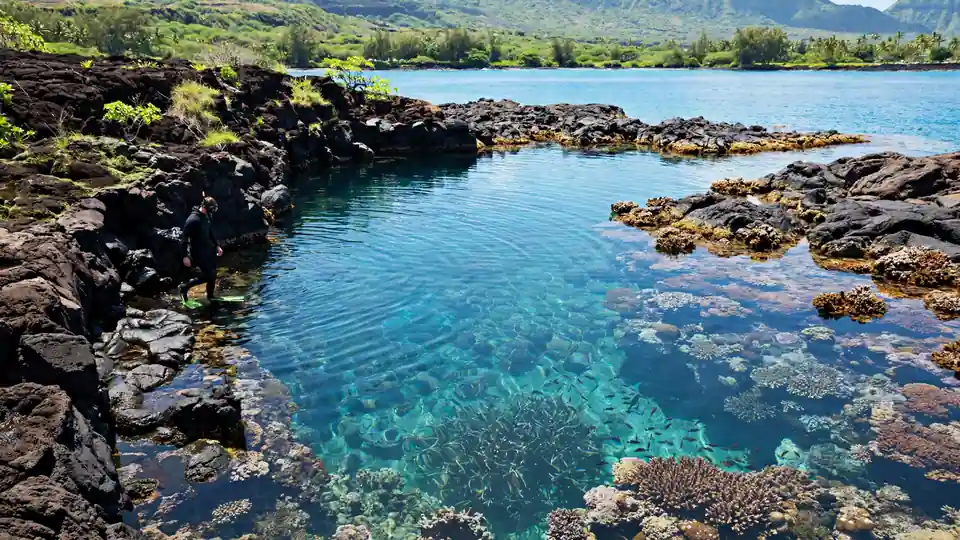
Despite the name, Shark’s Cove is not a shark hangout. It sits inside the Pūpūkea Marine Life Conservation District on the North Shore, and it is one of the best summer snorkel spots on Oahu. Lava rock formations create small caves, arches, and sheltered pockets where fish gather.
In summer (roughly May through October), the cove can be glassy and clear. In winter, it is not a place to snorkel; big swells make it hazardous, and people get hurt here every year when they ignore the surf.
- Best for: Intermediate snorkelers who are comfortable entering over rock.
- Pro tip: Wear water shoes for the rocky entry and go in the morning, before the wind comes up.
3. Electric Beach (Kahe Point): where the dolphins and big turtles show up
The nickname comes from the power plant beside the beach. Warm water from the plant’s outflow attracts a startling amount of marine life, including large green turtles, schools of ʻōmilu (bluefin trevally), and, on lucky mornings, spinner dolphins.
The water is deeper and the currents can be stronger than Hanauma Bay. This is not the best choice for a first snorkel, but for confident swimmers it is one of Oahu’s best shore spots, particularly in the morning.
- Best for: Strong swimmers who want big animals without a boat.
- Pro tip: Stay shallow and do not chase dolphins. If they are resting, they need to be left alone.
4. Waikiki and Turtle Canyon: easy wins for a short trip
If you are staying in Waikiki and want to snorkel without renting a car, you have two realistic options. You can walk into the calmer sections along the south shore, or you can book a short boat tour out to the area known as Turtle Canyon. Boats typically take you a short distance offshore where turtles feed along the reef, and the ride is half the fun.
What you will not get here is pristine, uncrowded reef. What you will get is convenience and a good chance of seeing honu.
5. Waimea Bay in summer: a calm change of pace
In winter, Waimea Bay is famous for massive surf. In summer, it flattens into a gentle blue bowl. Snorkeling is more about relaxing and floating than reef-hunting, but it is a lovely, lifeguarded way to spend a morning on the North Shore, and it pairs easily with Shark’s Cove nearby.
Best Places to Snorkel on Maui
Many Hawaii travel writers rank Maui number one for snorkeling, and it is easy to see why. You get a world-famous volcanic crater, protected marine reserves, and shore spots with warm, clear water, all within a short drive of each other.
Read Also: Turkey Hidden Gems: 24 Underrated Places to Visit
6. Molokini Crater: the most famous snorkel spot in Hawaii
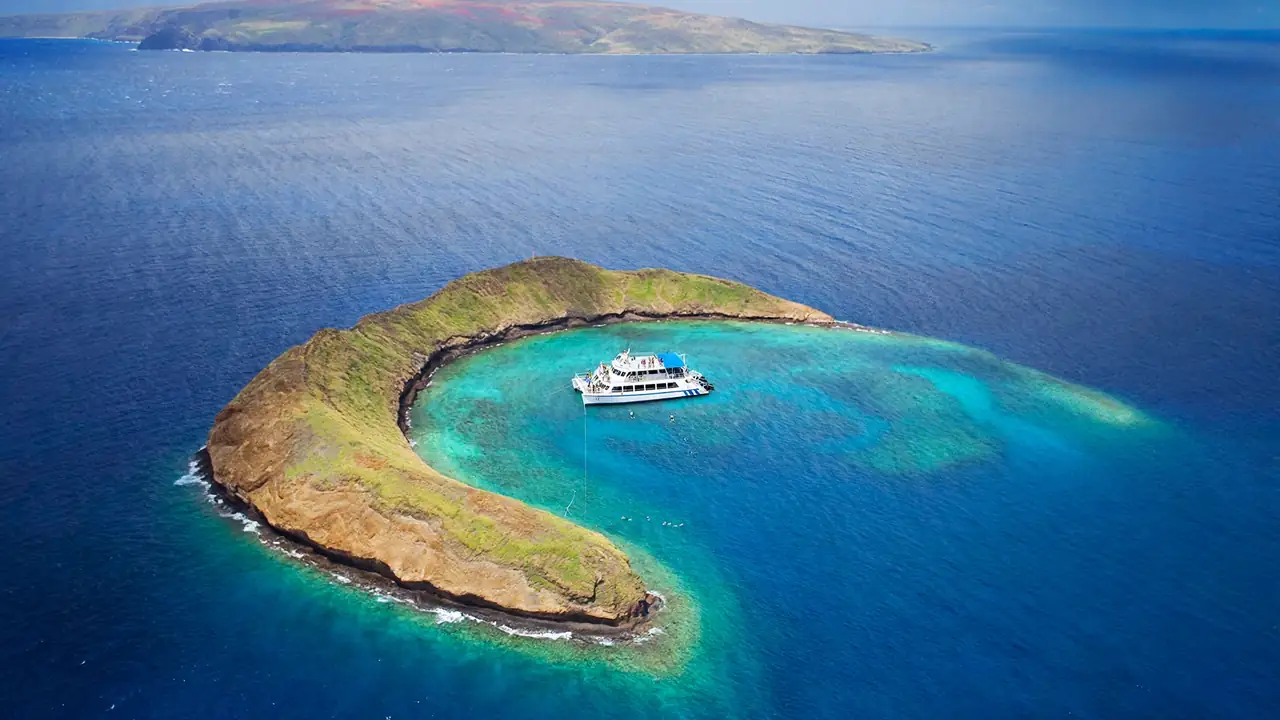
Molokini is a tiny crescent-shaped islet about three miles off Maui’s southwest coast, and it is what is left of a partially submerged volcanic crater. The inside curve shelters the water from wind and waves. That makes visibility excellent, often well over 100 feet on a good day, and the reef is healthy and full of fish.
You can only reach it by boat, so you are looking at a guided tour. Most tours leave early from Maui Nui (Maalaea) or Kihei, and you will typically snorkel at Molokini and then at a second stop, often along the Makena coast.
- Best for: Almost everyone. Beginners are fine if you take a guided tour with flotation gear.
- Pro tip: The early-morning departure is worth it. By midday, boat traffic and wind pick up and the magic fades.
- Cost note: Tours vary widely. A small-group boat usually costs more than a big catamaran, but you get more time in the water and less crowding. For Molokini, I think smaller is worth the money.
- Keep in mind: Molokini is a protected marine conservation district. The rules about touching and fishing are strict.
7. Honolua Bay: Maui’s best shore snorkel (in summer)
Honolua Bay sits just north of Kapalua and is a Marine Life Conservation District. Think of it as a big natural aquarium: rich coral gardens, lots of fish, and clear water on calm days. The entry is over a rocky shoreline, so water shoes are a good idea.
The catch is the same as every north-facing bay in Hawaii. In summer it is wonderful, especially in the morning. In winter, Honolua becomes one of the island’s most famous surf breaks and snorkeling is out of the question.
- Best for: Confident swimmers in summer.
- Pro tip: Aim for the morning on a calm day, ideally in late spring or early summer, when the water is clearest.
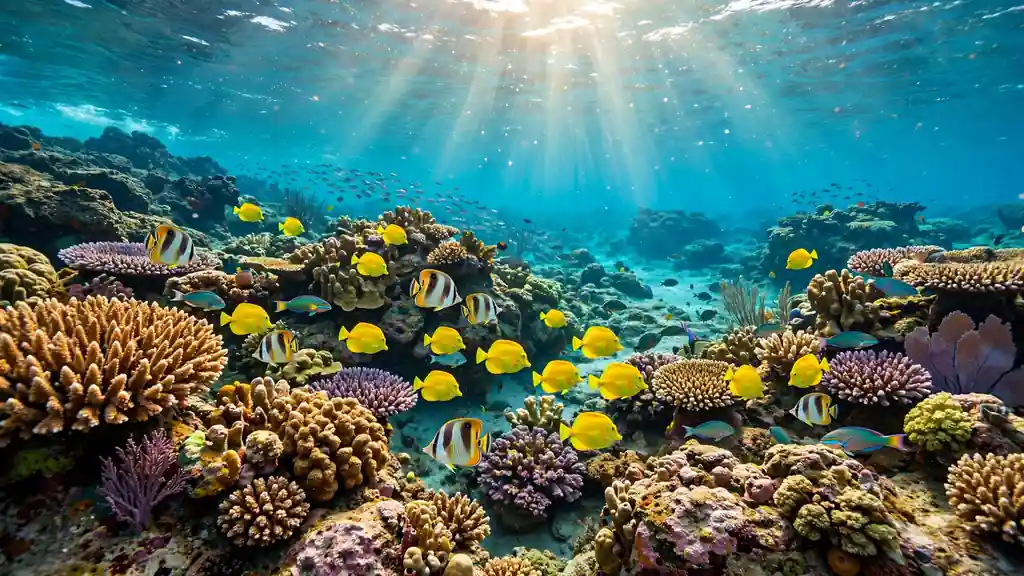
8. Kapalua Bay: protected, gentle, and family-friendly
Kapalua Bay is a small crescent beach framed by two lava points that hold back the swell. For a first-timer or a parent with kids, it is one of the safest and most pleasant shore snorkeling beaches on Maui. The reef is close to shore, the water is shallow near the edges, and amenities are nearby.
It can get busy because it is so easy, so arrive early. Stay near the rocky edges, where the fish congregate, and out of the swim-lane in the middle.
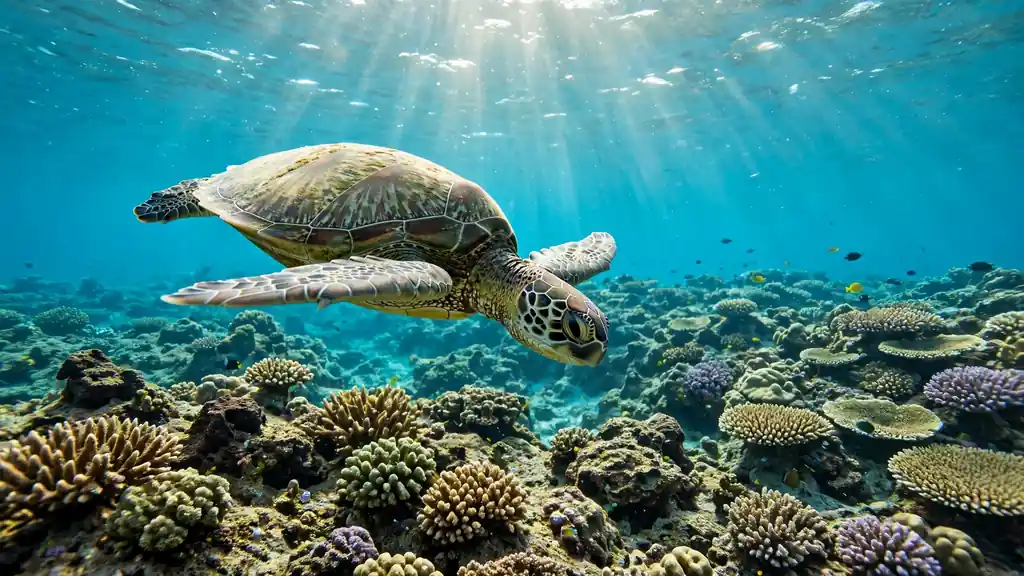
9. Turtle Town and Maluaka Beach: where the honu hang out
On Maui’s south coast, between Nahuna Point and Black Sand Beach, the area known as Turtle Town is the go-to place to see green sea turtles feeding and resting. Boat tours visit it regularly, and you can also reach part of the area from shore at Maluaka Beach.
Turtles are not guaranteed, but this is among the best odds on the island. Please keep your distance and never swim over a turtle in a way that blocks its path to the surface.
10. Black Rock (Puʻu Keka’a), Kāʻanapali: easy and lively
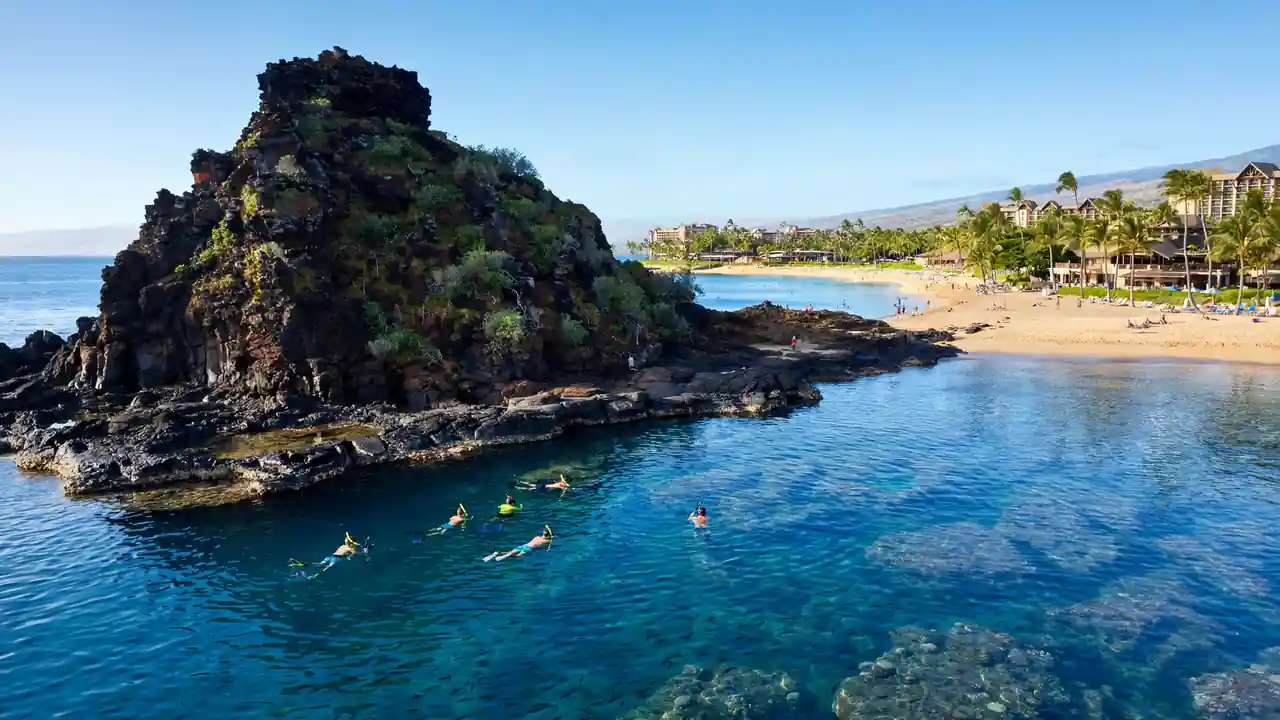
Black Rock is the volcanic headland at the north end of Kāʻanapali Beach. The water around it is clear, the fish are plentiful, and the entry is straightforward, which makes it a popular snorkeling spot for resort guests. Mornings are best, and the calm side of the rock is the one to choose. Check with lifeguards on the day, because conditions can change.
11. Olowalu Reef: a living coral reef close to shore
Olowalu, along the highway between Lahaina and Maalaea, is known for one of the most extensive coral reefs on Maui. Healthy coral heads sit just offshore, and turtles are common. The water can get murky after rain, and the reef is delicate, so this is a place to float quietly and be extra careful with sunscreen and fins.
12. ʻĀhihi-Kīnaʻu Natural Area Reserve: wild and rugged
On the south end of Maui, ʻĀhihi-Kīnaʻu is a protected reserve with rocky entry and dramatic scenery. Marine life is rich, but it is better for experienced snorkelers, and the reserve has its own rules and seasonal restrictions. Check the current regulations before you go and treat it as a place to visit lightly.
Frequently Asked Questions
What is the best place to snorkel in Hawaii for beginners?
Hanauma Bay is one of the most beginner-friendly places in the entire state. It is a flooded volcanic crater on Oahu’s southeast shore, with a crescent of sand, shallow protected water, and a reef that starts almost at your feet.
Do I need a reservation to snorkel at Hanauma Bay?
Yes. Non-resident visitors need a timed reservation, which typically opens two days in advance at 7:00 a.m. Hawaii time and sells out fast. The preserve is generally open Wednesday to Sunday, 6:45 a.m. to 4:00 p.m., with last entry at 1:30 p.m. It is closed on Mondays, Tuesdays, December 25 and January 1. The fee is $25 for non-resident adults (as of August 2026).
When is the best time to snorkel in hawaii?
Summer, roughly May through October, is the easiest time to snorkel, especially on the North Shore. In winter, roughly November through April, the North Shore is for watching, not for snorkeling, while the south shore is usually calmer and warmer.
What gear do I need to snorkel in Hawaii?
Mask and snorkel, fins, rash guard, reef-safe sunscreen, water shoes and a waterproof pouch. Use a mineral sunscreen with zinc oxide or titanium dioxide — in Hawaii, it is the law to use reef-safe sunscreen.
Where is the best place to see turtles while snorkeling in Hawaii?
Turtle Town (Maluaka Beach) on Maui’s south coast is the go-to place to see green sea turtles feeding and resting. Hanauma Bay and Electric Beach also attract large green turtles.
Is it safe to snorkel at Shark’s Cove?
In summer it is one of the best snorkel spots on Oahu, inside the Pūpūkea Marine Life Conservation District. In winter the North Shore is dangerous. The entry is over lava rock, so water shoes are a good idea