
Ask a room full of travelers to name their favorite season to travel and summer usually wins the vote. Ask a room full of experienced travelers and you’ll hear a different answer. Fall is the quiet favorite.
The crowds thin out. Prices soften. The light turns golden and the air gets crisp enough that a hot drink actually feels earned. Whether you’re driving a mountain road lined with maples, wandering a European old town, or sitting in a warm southern city with a glass of something local, autumn has a way of making a trip feel like more than a checklist.
Also Read : Best Places for Thanksgiving: 18 Unforgettable Getaways
This fall travel guide is built to be the only one you need. It covers when fall travel season really starts and ends in different parts of the world, how to pick a destination that suits your style, and where to go in the US and abroad. It also has the practical stuff most guides skip: budgets, booking timelines, packing, weather risks, sample itineraries and the mistakes that quietly ruin otherwise good trips.
Grab a coffee. Let’s plan something good.
Why Fall Is the Best Time to Travel
It’s easy to treat fall as the “after summer” season, a time to stay home and get back into routine. For travelers, though, it often beats summer on almost every measure.
Better weather in many places. Summer heat can make cities miserable and national parks exhausting. Fall temperatures sit in a comfortable middle range across much of the Northern Hemisphere. You can walk all day in Rome, Kyoto or Prague without melting, and mountain hikes become pleasant rather than punishing.
Fewer crowds. Once school starts back, family travel drops sharply. Attractions that were shoulder-to-shoulder in July often feel calm by late September. Wait times shrink, restaurants have tables, and you can actually hear the place you came to see.
Lower prices in many markets. Fall is generally a shoulder season for much of Europe and the Mediterranean, and for many beach and city destinations. Hotels and flights often drop compared with peak summer. The exception is foliage hotspots, where leaf season creates its own price spike. I’ll cover how to handle that later.
Seasonal experiences you can’t get any other time. Harvest festivals, wine-making season, apple picking, Oktoberfest-style celebrations, mushroom foraging, truffle season, pumpkin patches, and the foliage itself all happen in a short window. Some travel experiences are only available if you show up at the right moment, and fall has more of those than any other season.
Better light for photography. Photographers love autumn because the sun sits lower for longer, giving you soft, warm light for a good part of the day. Even phone photos come out better.
A natural fit for slower travel. The season invites cozy cabins, long dinners, scenic drives and museum days. If you’re the type who’d rather linger than sprint, fall rewards you.
Travel columnist Christopher Elliott makes a similar point in his own fall guide, saying that if you can get time off work or your kids can get time off school, fall is an ideal time to go. He notes that surveys show interest in travel remains high and that the most popular early fall destinations tend to be big cities such as New York, San Francisco, Los Angeles and Seattle. That’s a useful clue. If you want crowd-free fall travel, look just beyond the obvious picks.
When Is Fall Travel Season?
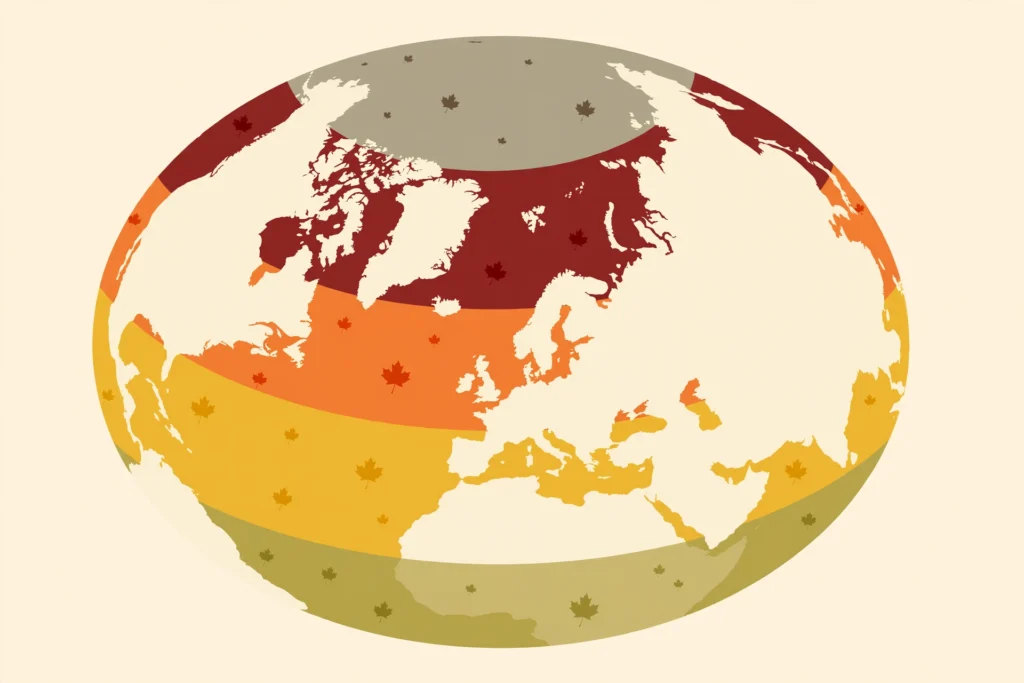
“Fall” is not one fixed window. It moves with latitude, altitude and hemisphere, and that’s exactly why people miss peak color or arrive a week too early.
Northern Hemisphere (US, Canada, Europe, East Asia)
- Early fall (September): Warm days, cool nights. Great for the Alps, Scandinavia, Canada’s far north and high-elevation spots in the Rockies. Early color starts at altitude and in northern latitudes.
- Peak fall (late September to late October): This is the main foliage window across most of the northern US, Canada, and central and northern Europe. Exact timing shifts by region and year.
- Late fall (November): Leaves are mostly down in the north, but this is prime season for the US South, the Mediterranean, Japan’s later-turning spots, Christmas market preparations in Europe and food-focused trips.
A good rule of thumb for the US: foliage generally moves from north to south and from high elevation to low. If you want to chase color, start in the mountains or northern states in late September and work your way south through October.
For Asia, Seoul tends to see strong fall color from late October into early November, and Kyoto’s famous autumn leaves typically peak later, in November. One popular destination roundup lists late October to early November as the best time to see Seoul’s autumn colors, and late September to mid-October for Quebec.
Must Read : Most Overrated Cities in the World (2026): 12 Places That Rarely Live Up to the Hype
Southern Hemisphere (Australia, New Zealand, South America, Southern Africa)
Fall here runs roughly March to May. Patagonia is a standout, with golden lenga and ñire forests in April and fewer visitors on the trails. Patagonia is often described as a lesser-known but incredible fall destination with dramatic landscapes. Wine regions in Argentina, Chile, South Africa and Australia also hold harvest celebrations in these months.
Tropical and subtropical places
Near the equator you don’t get “fall” in the leaf sense, but you do get seasonal shifts, such as the end of the rainy season or the start of cooler, drier months. Parts of Southeast Asia and the Caribbean become far more comfortable in the shoulder months, although hurricane season in the Atlantic runs through November, so travel insurance and flexible bookings matter.
How to Choose Your Fall Destination
Before you start scrolling photos, answer four quick questions from this fall travel guide. They’ll save you hours.
1. What’s your main goal?
Foliage chasing, food and wine, cozy relaxation, outdoor adventure, festivals, or culture? A foliage trip and a city food trip are very different things, with different ideal dates.
2. How far are you willing to travel?
A long weekend suggests a drive or a short flight. A full week or more opens up international options.
3. What’s your tolerance for crowds and prices?
Peak foliage weekends in famous towns book out months ahead, with high prices. If that bothers you, pick lesser-known areas or travel midweek.
4. Who’s coming?
Couples may want inns with fireplaces. Families need space and activities. Solo travelers may enjoy social towns with food halls and walking trails. Whatever your style, local tourism guides show there’s a fall trip to match, from cozy cabins, scenic inns and boutique hotels with fireplaces and views to scenic drives and hiking.
Once those answers are clear, the destination list below becomes much easier to read.
Best Fall Destinations in the United States
The US may be the easiest country in the world to build a fall trip around. You’ve got mountains, deserts, vineyards, coastlines and historic towns, all with their own version of autumn.
1. New England (Vermont, New Hampshire, Maine, Massachusetts)
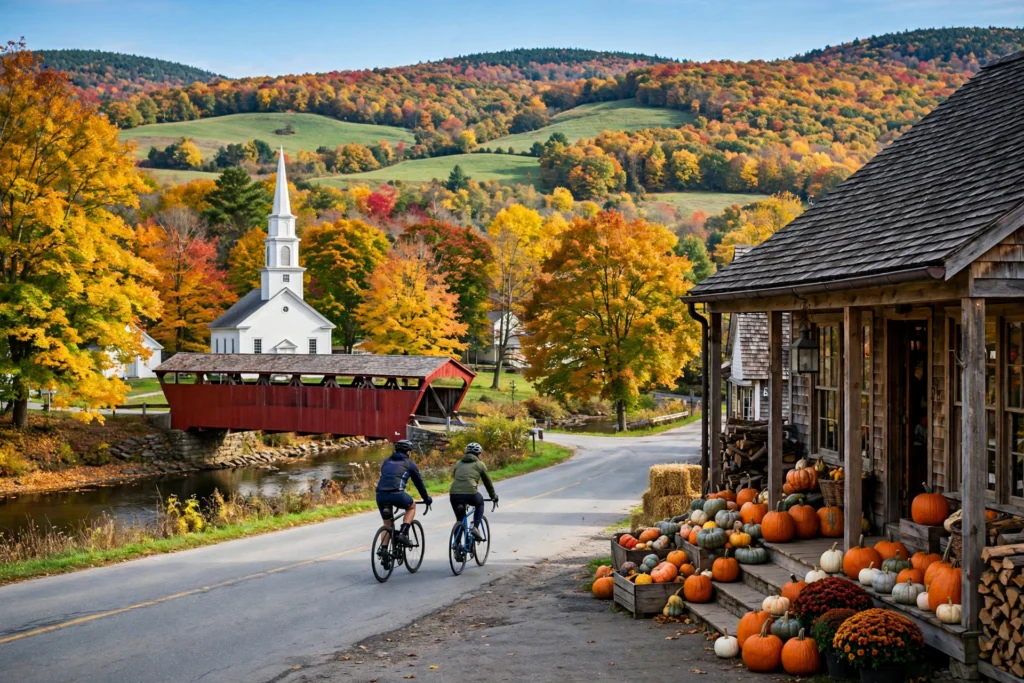
This is the classic. Covered bridges, white steeples, stone walls, roadside cider stands and hillsides that turn every shade of red. It’s famous for a reason, and it’s popular for the same reason.
- Best time: Late September in the north and higher elevations, through mid-October for southern New England.
- Don’t miss: Vermont’s back roads, New Hampshire’s Kancamagus Highway, the White Mountains, Acadia National Park in Maine, and the Berkshires in Massachusetts, where leaf-peeping combines with art, music and farm stands.
- Local tip: Staying one town off the most famous route often saves real money and cuts the traffic. Weekday travel makes a bigger difference here than anywhere else in the country.
The Berkshires in particular have become a favorite for people who want foliage without a long drive from major cities. There are also paid and free regional guides that map fall road trips and small-town coffee stops across all six states.
2. Upstate New York (Adirondacks, Catskills, Finger Lakes)
Easier to reach from New York City and far less overrun than parts of New England. The Adirondacks offer high-elevation color early, while the Finger Lakes combine foliage with wineries, waterfalls and lakeside towns.
- Best time: Late September to mid-October.
- Don’t miss: Whiteface Mountain scenic drive, Watkins Glen, a Finger Lakes wine trail, and the Hudson Valley’s apple orchards.
3. The Blue Ridge, Great Smoky Mountains and Shenandoah
Appalachian fall lasts longer because of the elevation range. You can chase color up and down the mountains for weeks.
- Best time: Mid-October to early November for most of the southern Appalachians, earlier at the highest elevations.
- Don’t miss: Blue Ridge Parkway, Shenandoah’s Skyline Drive, Great Smoky Mountains National Park, and Asheville’s craft-beer and arts scene.
- Local tip: Parkway sections can close for weather or maintenance, so check conditions before you go. Cell service can be weak, so download offline maps.
States like West Virginia have long promoted dedicated fall guides with regional itineraries, event listings and even a leaf identification key. West Virginia’s tourism office has described its fall guide as helping visitors make the most of their time with iconic photo stops and regional itineraries. It’s a reminder that smaller states often do foliage very well and with fewer crowds.
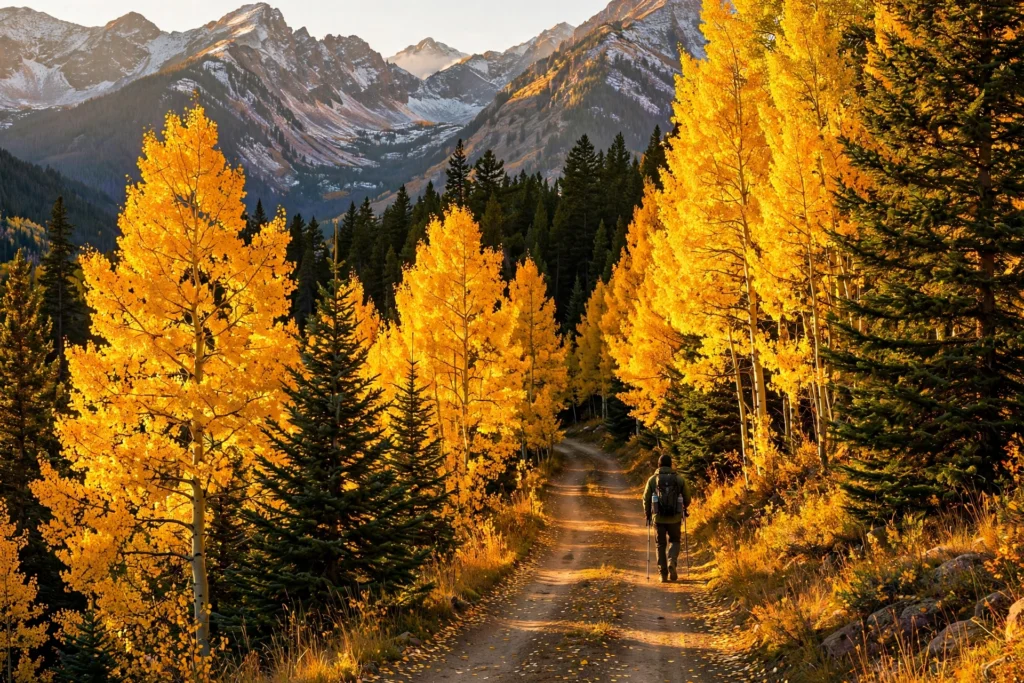
4. Colorado Rockies
Aspen groves turn a vivid gold, often earlier than eastern leaves. The contrast between yellow aspens, dark evergreens and early snow on the peaks is hard to beat.
- Best time: Mid-September to early October.
- Don’t miss: Aspen and the Maroon Bells, Kebler Pass, Steamboat Springs, Telluride, and Rocky Mountain National Park.
- Local tip: Weather swings quickly in the mountains. Pack layers and keep an eye out for early-season snow on high passes.
Must Read: Things To Do In Rome That Will Make You Fall Completely In Love With The Eternal City
5. The Pacific Northwest
Think rain-washed forests, vineyard valleys and waterfalls. Fall in Oregon and Washington is moody in a good way.
- Best time: October to early November.
- Don’t miss: The Columbia River Gorge, the Willamette Valley wine country, Mount Hood, and the North Cascades.
6. Utah and the Southwest
Many people don’t realize fall is one of the best seasons for the desert Southwest. Temperatures drop to comfortable levels, and the contrast of golden cottonwoods against red rock is spectacular.
- Best time: October to early November.
- Don’t miss: Zion National Park, Sedona, Capitol Reef, and the high plateaus where aspens turn gold.
7. The Midwest (Door County, Michigan’s Upper Peninsula, Minnesota’s North Shore)
Underrated and often cheaper than the coasts. Lake views, small-town festivals, cider donuts, lighthouse scenery and a slower pace.
- Best time: Late September to mid-October.
- Don’t miss: Door County in Wisconsin, Pictured Rocks in Michigan, and Minnesota’s Highway 61 along Lake Superior.
8. Napa, Sonoma and California’s Wine Country
Harvest season means grape stomps, vineyard dinners and golden vines. Fall is also generally less crowded than peak summer in many wine regions.
- Best time: September to October for harvest, with color lingering into November.
9. The Warm-Weather South (Savannah, Charleston, New Orleans, Austin)
If you’d rather skip the cold, fall is wonderful in the South. Heat and humidity ease, outdoor dining comes back, and festivals fill the calendar.
- Best time: October to November.
- Don’t miss: Walking tours in Savannah and Charleston, live music in New Orleans, and Texas Hill Country’s wineries and farm stands.
10. Big-City Fall Breaks (New York, Chicago, Seattle, San Francisco)
City trips in autumn are easy to love. Central Park in color, Chicago’s lakefront, Seattle’s farmers markets, San Francisco’s famously warm September and October weather. You trade foliage-chasing for museums, restaurants and theater. Just remember that major cities are also the most popular early fall picks, so book early.
Best Fall Destinations Around the World
Also Read: Best Places to Travel in October
If you’ve got a passport and a few days to spare, these places make fall feel genuinely special.
Quebec, Canada
French-Canadian charm plus a blaze of color. Old Quebec City looks like a European postcard in October, and the Laurentian Mountains, Eastern Townships and Charlevoix put on a show. Popular guides recommend late September to mid-October as the best window to visit Quebec. Combine a city stay with a drive through small villages and cozy auberges.
Kyoto and Japan
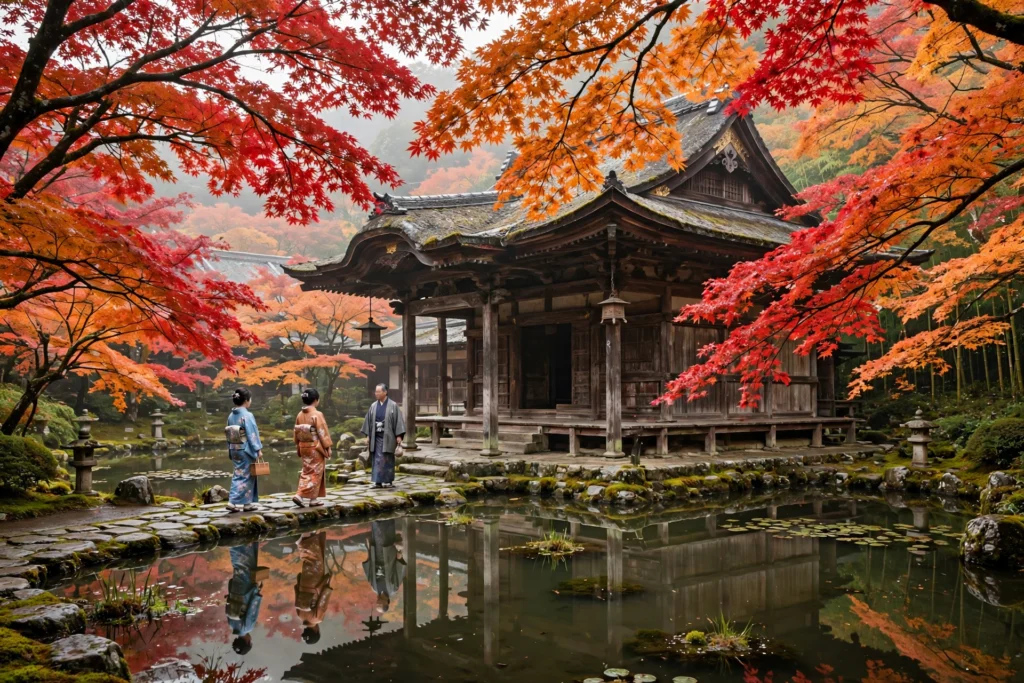
Autumn in Japan is a national event. Temples, gardens and mountain trails glow red and orange, and seasonal food adds to the experience. Travelers are encouraged to try seasonal dishes enjoyed while viewing autumn leaves and to attend local festivals with dances, music and food. Peak color in Kyoto usually lands in November, with northern regions turning earlier. Book accommodation far ahead, because this is one of the busiest times of the year.
Seoul and South Korea
Palaces, hillside temples and city parks turn fiery in late October through early November. It’s compact, well connected and food-obsessed, which makes it great for both first-timers and returning travelers. Seoraksan National Park offers some of the most dramatic mountain color in the country.
Bavaria, Germany
Fairytale castles, Alpine meadows, beer-hall culture and harvest festivals. Bavaria in fall is often described as a fairytale come to life, with picturesque landscapes and a festive atmosphere. Munich’s Oktoberfest happens mainly in late September and early October, but smaller towns hold quieter local festivals well into the season. Neuschwanstein looks especially good with a golden valley underneath it.
Tuscany and Umbria, Italy
Olive harvests, truffle season, wine festivals and quiet roads. Medieval hill towns are far calmer than in summer, and the food is spectacular. Expect cooler nights and the occasional rainy day.
The Scottish Highlands
Heather turns the hills purple-brown, stags roar in the glens, and the light is moody and dramatic. Castles, distilleries and cozy pubs make rainy days feel like part of the plan. Pack waterproofs.
Prague, Vienna and Central Europe
Fall is among the best times for historic capitals. Vineyards around Vienna turn golden, Prague’s rooftops glow under softer light, and cafe culture feels especially right. Crowds are lighter than in summer, and Christmas market season begins to appear toward the end of November.
Patagonia (Argentina and Chile)
If you’re traveling in the Northern Hemisphere’s spring but want fall colors, head south. Torres del Paine and the Argentine lakes region put on a golden show around April, with calmer trails.
Sunny alternatives: Greece, Portugal and the Canary Islands
For travelers who want warmth with fewer people, the Mediterranean in September and October is hard to beat. The sea is still warm, the heat is gentler, and prices usually drop from summer highs.
Types of Fall Trips (and Who They Suit)
Picking a trip style can be easier than picking a place.
The classic foliage road trip
Best for couples, friends and anyone who loves driving. Plan loops rather than out-and-back routes so you see new scenery every day. Build in flexible time, because the best views are often unplanned stops.
The cozy cabin escape
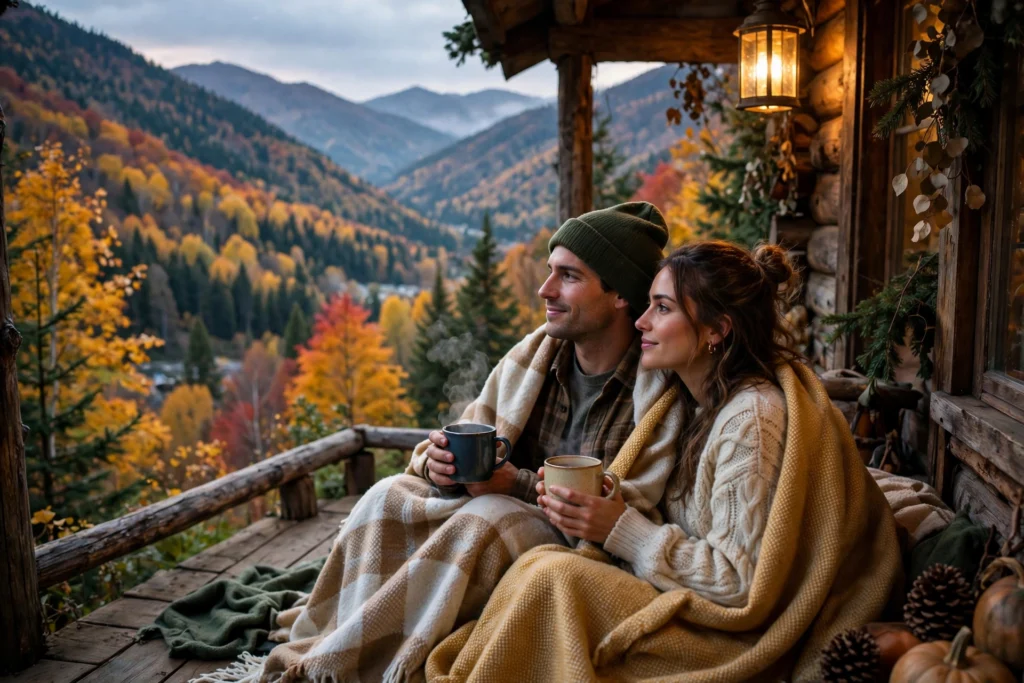
Book a cabin or inn with a fireplace, stock up on groceries and do almost nothing. Great for burned-out travelers and anyone celebrating something small. Look for places with a porch or hot tub, and make sure heat and Wi-Fi details are in the listing.
The food and harvest trip
Wine regions, apple orchards, farm-to-table dinners, truffle hunts and cider mills. This is one of the most rewarding ways to travel in the shoulder season because the food is at its best.
The festival trip
Oktoberfest, local harvest fairs, film festivals, lantern festivals, pumpkin festivals and cultural events. Check dates early, since many are tied to specific weekends, and book accommodation well ahead.
The adventure trip
Hiking, cycling, kayaking and photography. Fall is often the best season for long hikes because temperatures are mild and bugs are fewer. Daylight is shorter, so start early and carry a headlamp.
The city culture break
Museums, theaters, markets and architecture. Cooler weather means you can pack more into a day without the heat slowing you down.
How Much Does a Fall Trip Cost?
Fall can be one of the most affordable travel seasons, but only if you know where the exceptions are.
Where fall is cheaper:
- Beach towns after peak summer
- Many European cities outside holiday weeks
- Mediterranean destinations in late September and October
- National parks outside of popular foliage windows
- Mid-week stays almost anywhere
Where fall is more expensive:
- Famous foliage regions on peak weekends
- Major festival cities during their events
- Japan’s peak color weeks
- Holiday weekends such as Columbus Day / Indigenous Peoples’ Day and Thanksgiving
Travel writers and deal sites often point out the same thing, which is that fall is typically a slow travel season, but some destinations heat up as temperatures cool. Fall is typically a slow travel season, but certain destinations really heat up as the temperatures cool.
Read Also : Best Places To See Autumn Leaves Japan: The Ultimate Guide To Chasing Fall Color Like A Local
A simple budgeting framework
Rather than guessing, split your budget into five buckets:
- Transport: Flights, gas, rental car, train tickets
- Lodging: Usually your largest cost in foliage areas
- Food: Plan for sit-down meals plus some picnic or grocery savings
- Activities: Parks, tours, tastings, festival tickets
- Buffer (10 to 15 percent): For weather changes, parking, tolls or a surprise detour
Money-saving tips that really work
- Travel midweek. Sunday through Thursday stays can be dramatically cheaper in leaf towns.
- Book one town away. Stay in a nearby town and drive in for the main sights.
- Go slightly early or late. A week before or after peak color still looks beautiful and costs less.
- Use free cancellation. Fall weather can shift your plans, and flexibility is worth a few dollars.
- Mix hotels and rentals. A kitchen helps with breakfast and lunch costs.
- Watch for shoulder-season packages. Some regional tourism boards and hotels offer bundled deals in September and November.
When to Book Your Fall Trip
Timing matters more in fall than in many seasons because popular places fill early and then stay full.
- Famous foliage towns and inns: 4 to 8 months ahead (yes, really). Small inns often sell out by spring.
- Japan, Korea and other peak-color international trips: 6 to 9 months ahead for flights and hotels.
- European city breaks: 2 to 4 months ahead for the best prices.
- Road trips with flexible lodging: 4 to 8 weeks ahead, but book weekends earlier.
- Last-minute weekend getaways: Look at secondary towns, cancellations and midweek rates.
Because foliage depends on temperature, sunshine and rainfall, you can’t predict exact peak color months in advance. Book a flexible window, and then use leaf-tracking updates from state tourism sites to fine-tune your final plans.
Fall Travel Guide Packing List
Also Read: Travel Packing Hacks
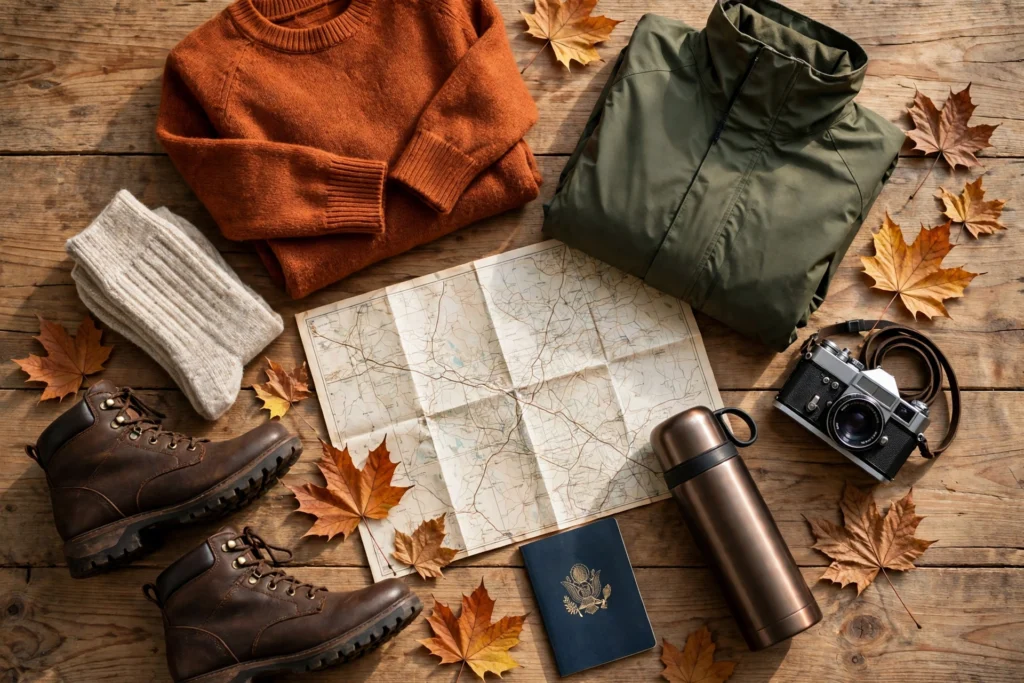
Layers are the entire strategy. Mornings can be cold, afternoons warm, and weather can change within an hour.
Clothing
- Lightweight base layers (merino or technical fabric)
- A warm sweater or fleece
- A waterproof, breathable jacket
- One packable down or insulated layer
- Comfortable, broken-in walking shoes or boots with good grip
- Warm socks (and an extra pair)
- A hat, light gloves and a scarf, especially for mountain destinations
- A casual nicer outfit for dinners
Gear
- Compact umbrella
- Day pack
- Reusable water bottle and a thermos
- Portable phone charger
- A power adapter if traveling abroad
- A headlamp or small flashlight for early sunsets
Photography
- A phone with plenty of storage, or a camera with a spare battery (cold drains them fast)
- A microfiber cloth for rain and mist
- A small tripod if you enjoy golden-hour or low-light shots
Health and comfort
- Lip balm and moisturizer (dry fall air)
- Allergy medication if you’re sensitive to pollen or mold
- Insect repellent for mild-weather hiking areas
- A small first-aid kit
Documents
- Travel insurance details, IDs, reservations and offline copies of maps and confirmations
Weather, Safety and Practical Tips
Fall is gentle, but it isn’t risk-free. A little preparation goes a long way.
Check the weather, then check it again
Mountain passes can see snow before the calendar says winter, and coastal regions can get storms. Look at forecasts a week out, three days out and the morning you leave.
Mind hurricane season
Atlantic hurricane season runs into November. If you’re heading to the Caribbean, Gulf Coast or Southeast US, buy flexible bookings and consider travel insurance. Read policy terms carefully so you know what is and isn’t covered.
Daylight is shorter
Sunsets arrive early. Plan hikes and drives so you’re not caught out after dark, especially on unfamiliar mountain roads. Wildlife is also more active at dusk and dawn, so drive carefully.
Driving tips for foliage routes
- Pull over only at designated spots, and never stop in the middle of the road for photos
- Expect slow traffic on peak weekends
- Download offline maps
- Fill the tank before remote stretches
- If you’re driving an electric vehicle, make sure there are charging stations along the way so you don’t end up stranded
- Be careful of wet leaves on the road, which can be as slippery as ice
Hunting season
In many rural areas, hunting seasons overlap with fall travel. Wear bright colors on trails if hunting is allowed nearby, and check local rules.
Travel advisories and insurance
Check travel advisories, health requirements, vaccinations and travel insurance needs before you go. Insurance is especially useful for international trips, flexible-date bookings and anywhere weather can disrupt flights.
Traveling with kids or pets
Pack extra layers, snacks and a plan for early dark. Check that lodging is pet-friendly in advance, and confirm any fees.
Sample Fall Itineraries
Use these as templates, and swap towns to match your region.
Long weekend: Cozy foliage escape (3 days)
Day 1: Drive to a mountain or countryside town. Stop at a farm stand or cider mill. Check in, walk the main street, and have a slow dinner.
Day 2: Early scenic drive or short hike. Lunch at a local cafe. Afternoon visit to a vineyard, brewery or small museum. Sunset viewpoint and an early night by the fire.
Day 3: Sunrise coffee, one more short trail or lake stop, then a relaxed drive home with a final stop at a bakery.
One week: Classic New England loop (7 days)
Days 1 to 2: Arrive in Boston or Burlington. Settle in and explore, then head north.
Days 3 to 4: Vermont back roads, a covered bridge, small villages and a farm dinner.
Days 5 to 6: The White Mountains in New Hampshire, scenic drives, waterfalls and an easy summit hike.
Day 7: Coastal Maine or the Berkshires for a last seafood or farm-to-table meal before you head home.
Ten days: Fall in Japan
Days 1 to 3: Tokyo for food, neighborhoods and day trips to places like Nikko.
Days 4 to 7: Kyoto and Nara for temples, gardens and early-morning visits before crowds arrive.
Days 8 to 9: A mountain or onsen town for hot springs and quieter scenery.
Day 10: Return to Tokyo or Osaka for departure and last-minute shopping.
Five days: Warm-weather fall in the South
Days 1 to 2: Savannah or Charleston for walking tours, historic homes and long outdoor dinners.
Days 3 to 4: A coastal island or river town for easy beach days and sunsets.
Day 5: A farm, market or distillery stop on the way out.
Fall Travel Mistakes to Avoid
Even experienced travelers fall into these traps.
- Booking too late for famous areas. The best inns and cabins vanish early.
- Assuming peak color is a fixed date. It shifts every year with weather. Keep your plans flexible.
- Overpacking the itinerary. Short days and slow traffic mean you’ll see fewer places than you expect. Pick fewer stops and enjoy them.
- Skipping layers. A single heavy coat isn’t as useful as three lighter layers.
- Ignoring road conditions. Mountain roads, weather closures and seasonal shutdowns can change your route.
- Forgetting that some attractions close for the season. Check hours, especially for ferries, small museums, seasonal restaurants and mountain lifts.
- Not planning for sunset. If you want a viewpoint at golden hour, arrive early and know how long it takes to get back.
- Following the crowd. The most-shared spot is rarely the best one. Ask locals where they go.
Read Also : Best Holiday Destinations: 20 Places Worth Booking a Flight For
Local Tips That Make a Difference
- Chase color by elevation. If one area is past its peak, drive higher or farther north.
- Go early. Morning light and empty overlooks are worth the alarm.
- Eat seasonally. Apple cider donuts, squash soups, local cheeses, new wine, roasted chestnuts and mushrooms are all worth ordering.
- Visit farmers markets. They’re the fastest way to feel the season and meet people.
- Be a considerate visitor. Don’t trample fields for photos, park only where allowed, and respect private property.
- Leave a little room. Some of the best memories come from the unplanned detour.
Final Thoughts: Make This the Fall You Actually Travel
Fall rewards people who plan a bit and then relax into the trip. You don’t need an elaborate itinerary or a huge budget. You need a flexible window, a destination that matches what you want from the season, warm layers and a willingness to slow down. That’s the whole point of this fall travel guide.
Pick your style, pick your region, book your lodging early, and keep your days loose enough to follow a good smell of woodsmoke down a side road. Do that and you’ll understand why so many travelers quietly call autumn their favorite season to go anywhere.
Frequently Asked Questions
1. What is the best month for fall travel?
It depends on where you’re going. In the northern US and Canada, late September to mid-October is usually best for color. In the southern Appalachians and much of Europe, mid-October to early November works well. In Japan and Korea, late October through November is typical. Warm-weather destinations like the US South and the Mediterranean shine in October.
2. Is fall a cheap time to travel?
Often, yes, but not everywhere. Many beach and city destinations get cheaper after summer, and European shoulder-season rates can drop noticeably. Famous foliage towns and big festival cities can be pricier, especially on weekends, so travel midweek or stay in nearby towns to save.
3. How far in advance should I book a fall trip?
For popular foliage areas, book 4 to 8 months ahead, since small inns sell out early. International peak-color trips such as Japan are best booked 6 to 9 months ahead. Quieter destinations and city breaks can often be booked 1 to 3 months out.
4. How do I know when peak fall foliage will happen?
Peak timing varies every year based on temperature, rainfall and sunlight. Use state and regional tourism foliage trackers as you get closer, and choose a flexible travel window. Heading to higher elevations or farther north can extend your window.
5. What should I pack for a fall vacation?
Pack layers: base layers, a sweater or fleece, a waterproof jacket and comfortable shoes with grip. Add a hat, gloves and scarf for mountain areas, plus a portable charger, water bottle and umbrella. Bring a small first-aid kit and any seasonal allergy medication.
6. Where can I travel in fall if I don’t want cold weather?
Try the US South (Savannah, Charleston, New Orleans, Austin), the desert Southwest, Southern California, or Mediterranean destinations like Greece, Portugal and southern Spain. Many are at their best in October.
7. What are the best fall destinations for couples?
Cozy inn towns in New England, the Berkshires, Napa and Sonoma, the Finger Lakes, Quebec City, Tuscany and Kyoto are all very romantic. Look for lodging with fireplaces, scenic views and walkable dining.
8. Is it safe to travel in fall?
Generally yes, but check the basics. Watch the weather, hurricane forecasts in the Atlantic, early snow in the mountains and shorter daylight. Check official travel advisories for international trips, and consider travel insurance for flexibility.
9. What are the best fall family vacation ideas?
Apple orchards and pumpkin patches, national parks in October, scenic train rides, farm stays, lakeside cabins and small-town festivals all work well. Pick places with easy trails, indoor backup options and early dinners.
10. Can I do a fall trip on a small budget?
Yes. Travel midweek, drive instead of flying, stay one town away from the famous spot, use a rental with a kitchen, and pick lesser-known regions like the Midwest or smaller Appalachian towns. Book refundable rates so you can adjust if prices drop.