
Most people arrive in Pisa with a plan that fits on a sticky note: see the tower, take the photo, catch the train. And honestly, that plan works. But it also means millions of visitors leave without ever seeing the river at dusk, tasting a proper cecina, or wandering under the arcades of a university town that has been quietly clever for nearly a thousand years.
This Pisa travel guide is written for both kinds of traveller. If you only have three hours between flights, you will find a tight plan that gets you in, out and fed. If you have a weekend, you will find a slower route through the parts of the city that most guides skip. Along the way we cover tickets, transport, the best time to visit, where to eat, where to sleep, what to avoid, and which day trips are actually worth your time.
The information here reflects what was available at the time of writing. Opening hours and prices in Italy change, sometimes without much announcement, so double check anything critical on the official websites mentioned below before you book.
Also Read : Famous Places In Hawaii: 85 Plus Unforgettable Spots Every Island Lover Needs On Their List
What You Will Find in This Pisa Travel Guide
- Why Pisa deserves more than a quick photo stop
- Pisa at a glance: fast facts
- The best time to visit Pisa, month by month
- How to get to Pisa from the airport, Florence, Rome and beyond
- How to get around the city
- How many days you really need
- The Piazza dei Miracoli: tower, cathedral, baptistery and more
- Tickets, prices and booking tips
- Things to do in Pisa beyond the Leaning Tower
- Ready-made itineraries: half day, one day, two days and three days
- Day trips from Pisa
- What to eat and drink
- Where to stay
- Festivals and events
- Budget, safety and practical tips
- Frequently asked questions
Why Pisa Deserves More Than a Quick Photo Stop
The usual advice is that Pisa is a day trip, and that advice is not wrong. Many of the top-ranking guides online treat the city as a short stop between Florence and the coast, and the hotel choice is smaller than in neighbouring cities. But reducing Pisa to one lawn and one leaning building misses what the city actually is.
For several centuries Pisa was a maritime republic, a rival to Genoa and Venice, with ships trading across the Mediterranean. The money, marble and ambition from that era paid for the monuments in the Piazza dei Miracoli. The same period left behind Romanesque churches, medieval towers, and a street plan that still feels more like a working city than a theme park.
Today Pisa is also a university town. The University of Pisa dates back to the fourteenth century, and the Scuola Normale Superiore, one of Italy’s most prestigious institutions, sits on the city’s most beautiful square. Thousands of students keep the cafes full, the bookshops open and the evening aperitivo scene lively. Walk ten minutes in any direction from the tower and the tourist crowds thin out dramatically.
If you want a gentle introduction to Tuscany without the price tag and crowds of Florence, Pisa is a very good base. It is also a good place to be honest about what kind of traveller you are: the person who wants one iconic photo, or the person who wants to understand why that tower was built in the first place.
Pisa at a Glance: Fast Facts
Before we go deeper, here is the short version most people want first.
- Country and region: Italy, Tuscany (province of Pisa)
- Location: Roughly 80 to 90 kilometres west of Florence, near the Tyrrhenian coast, on the Arno River
- Main airport: Pisa International Airport Galileo Galilei (PSA), very close to the city centre
- Language: Italian. English is widely understood in tourist areas, less so in small local shops
- Currency: Euro
- Best months: April to June and September to October
- Famous for: The Leaning Tower, the Piazza dei Miracoli (a UNESCO World Heritage Site), the University, Galileo Galilei, and the Luminara festival
- Ideal stay: One full day if you are rushed, two nights if you want to enjoy it
- Walkability: Excellent. Most of the historic centre can be covered on foot
A quick note on Galileo. The astronomer was born in Pisa in 1564, and the famous story of him dropping balls from the tower to test falling objects is widely told, though historians doubt it ever happened in that way. Treat it as a good legend and you will not be disappointed by it.
Best Time to Visit Pisa
Pisa is a year-round city, but the experience changes a lot depending on when you arrive. Here is a month-by-month look, with honest notes about crowds and weather.
January and February: Quiet, cool and often damp. Daytime temperatures are typically in the single digits to low teens Celsius. You will get the Piazza dei Miracoli almost to yourself on weekday mornings, and hotel prices are at their lowest. Bring a proper coat and an umbrella.
March: The first signs of spring show up. Weather is unpredictable, and a rainy day is likely, but the lawns are greener and crowds are still manageable.
April and May: Many locals and long-term visitors consider this the sweet spot. Mild days, flowers in the gardens, and comfortable walking weather. Expect school trips and more tour buses, especially near Easter and public holidays.
June: Warm and sunny, with long evenings. This is also the month of Pisa’s biggest festival, the Luminara di San Ranieri on the evening of 16 June, when the riverbanks are lit by thousands of candles and lanterns. If you want to see it, book accommodation months ahead.
July and August: Hot, bright and crowded. Afternoons can be uncomfortable, particularly on the open Piazza where there is little shade. Many Italians leave town in mid-August, so some family-run restaurants close for a week or two. If you must visit in summer, go early in the morning and use the hot afternoon for a long lunch or a trip to the nearby coast.
September and October: Excellent. The heat softens, the light is beautiful, and crowds start to thin. The sea is still warm enough at nearby beaches in early September.
November: This is typically the rainiest period in this part of Tuscany. Expect grey skies, occasional flooding warnings along the Arno, and very quiet streets. Good for museums and long lunches.
December: Cool and festive. Christmas lights and markets are smaller than in bigger cities, but the mood is pleasant, and you will find good value on hotels outside the holiday week.
The short answer: If you can choose, aim for late April to early June or mid-September to mid-October. If you are going to see the Luminara, plan around 16 June and book early.
Must Read : Best Beach Resorts In California For An Unforgettable Coastal Escape
How to Get to Pisa
Pisa is easy to reach, which is one reason it is such a popular first or last stop in Italy.
By Air
Pisa International Airport, officially named after Galileo Galilei, is the main international gateway for Tuscany. Many European low-cost airlines fly here, along with seasonal long-haul services, and plenty of travellers use it as the entry point for Florence as well. The airport is very close to the historic centre, which makes Pisa one of the most convenient airport cities in Italy.
The airport is linked to Pisa Centrale railway station by the Pisa Mover, an automated shuttle. The service replaced the older LAM Rossa bus route that earlier guides still mention. The ride takes only a few minutes, and tickets cost a few euros. There are also direct regional trains between the airport and the station, taxis, and rental car desks on site.
By Train
Pisa Centrale is a major rail junction. Regional and intercity trains arrive from Florence, Lucca, La Spezia (the gateway to Cinque Terre), Livorno, Genoa and Rome, among others. From Florence Santa Maria Novella, regional trains typically take a little over an hour, and fares are low compared with most European rail journeys. From Rome, expect a longer ride, usually with a change or a slower direct service.
Two useful tips. First, buy tickets at the station machines, at tobacconist shops, or through the Trenitalia app, and always validate paper tickets in the little machines before boarding if they are not date-stamped. Second, Pisa Centrale is on the south side of the centre. The Piazza dei Miracoli is to the north-west, roughly a 25 to 30 minute walk. Many people walk it happily because the route crosses the Arno and passes interesting streets.
By Car
From Florence, the drive is about an hour and a half on the motorway, longer in traffic. From the coast you can join the A12 motorway. In general, we would not recommend driving into the historic centre. Pisa has a limited traffic zone, called a ZTL, and fines for entering without permission arrive in the post weeks later, sometimes with rental company admin fees added on top. Park outside the centre, and walk or take a shuttle.
There are large car parks near the Piazza dei Miracoli, as well as park-and-ride options on the edge of town. Check the current rates and rules locally before you go.
By Bus
Regional bus operators connect Pisa with smaller towns across Tuscany. They are usually cheaper than trains for some routes, but slower. If you are coming from Lucca, the train is the easiest choice.
From Florence: Train or Tour?
This is a very common question. If you are comfortable with public transport, take the train. It is cheaper, flexible, and lets you decide how long to stay. Organised tours make sense mainly if you want a guide, or you are short on time and want to combine Pisa with Lucca or Siena in one day. For most independent travellers, a regional train ticket and a printed timetable screenshot are all you need.
Getting Around Pisa
The historic centre is compact, flat and walkable. That is good news, because your feet will be your best transport.
On foot: You can walk from the station to the Piazza dei Miracoli in half an hour, with plenty of interesting stops along the way. Wear comfortable shoes, because many streets have uneven stone paving.
By bus: The city bus network is run by a regional operator, and tickets are sold at tobacconists, newsstands and station machines. Buy before boarding and validate on the bus. There are routes that connect the station area with the Piazza dei Miracoli. If you are tired after a long travel day, they are worth using. Check the latest route numbers on the operator’s site or app, because they change from time to time.
By taxi: Taxis are available at the station and the airport, and you can also order them by phone or app. A short ride within the centre is not expensive, but it is worth confirming the price or meter use before you start.
By bike: Pisa is flat and bike friendly, and cycling is how many students get around. There are rental shops and some bike-share schemes. It is a pleasant way to reach the riverside and the parks outside the walls.
Mobility note: Cobblestones and narrow pavements can be challenging for wheelchair users and parents with strollers. The Piazza dei Miracoli itself is mostly level, and the official site provides accessibility information. The Tower climb, however, is not accessible to everyone.
Also Read : Romantic Getaways In Florida That Will Reignite The Spark In Your Relationship
How Many Days Do You Need in Pisa?
This depends entirely on your travel style.
Three to four hours: Enough for the Piazza dei Miracoli, the tower from the outside, and a quick lunch. It is rushed, but possible, especially if you are on a layover.
One full day: Best for most first-timers. You can climb the tower, visit the cathedral and baptistery, walk along Borgo Stretto and the Arno, and enjoy a relaxed dinner.
Two days: This is the ideal pace. You see the main sights on day one, and spend day two with the quieter side: museums, markets, the botanical garden, a sunset walk on the river and a trip to the coast or Lucca.
Three days: Perfect if you want to use Pisa as a base. You can combine the city with Lucca, the seaside at Marina di Pisa, San Rossore park, and even Cinque Terre or Florence in a longer day.
Our honest recommendation is to stay at least one night. The Piazza dei Miracoli at the end of the afternoon, when most coaches have left, is a completely different place.
The Piazza dei Miracoli: Pisa’s Main Event
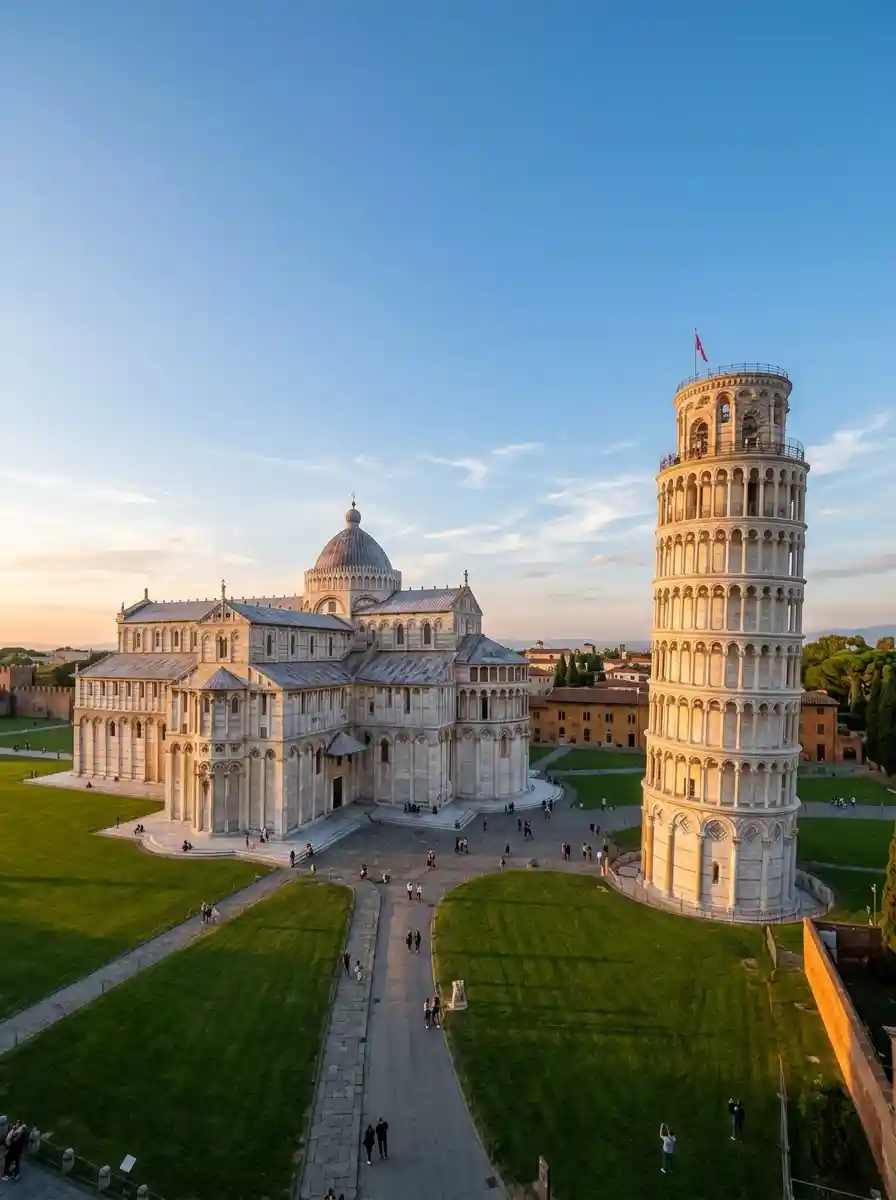
The Piazza dei Miracoli, also called Piazza del Duomo, is a UNESCO World Heritage Site and the reason most people come to Pisa. The name means Square of Miracles, and it is a big open lawn bordered by four major monuments built in white and grey marble. The scale surprises many visitors. Photos tend to make it look small and tight, but in reality it is wide and calm, and you need a couple of hours to see it properly.
The whole complex is managed by the Opera della Primaziale Pisana, usually shortened to OPA, an institution that has looked after these buildings for centuries. Its official site, opapisa.it, is where you should buy tickets. We will come back to that, because there are plenty of unofficial sellers waiting to charge you more.
The Leaning Tower of Pisa (Torre Pendente)
The tower is the bell tower of the cathedral. Construction began in 1173 and, with long interruptions caused by wars and the soft ground, it took about two centuries to finish. It started leaning early, because the foundation sits on soft, uneven soil of clay and sand. Builders tried to compensate by making upper floors slightly taller on the lower side, which gave the tower its subtle banana curve.
The lean worsened over the centuries. By the late twentieth century it was dangerously close to collapse, and the tower was closed to visitors in 1990. Engineers spent years removing soil from beneath the high side and adding counterweights, and the structure was gently straightened. It reopened in 2001, and experts stated that it was stable for a very long time. Today it stands roughly 56 metres tall and leans at close to four degrees.
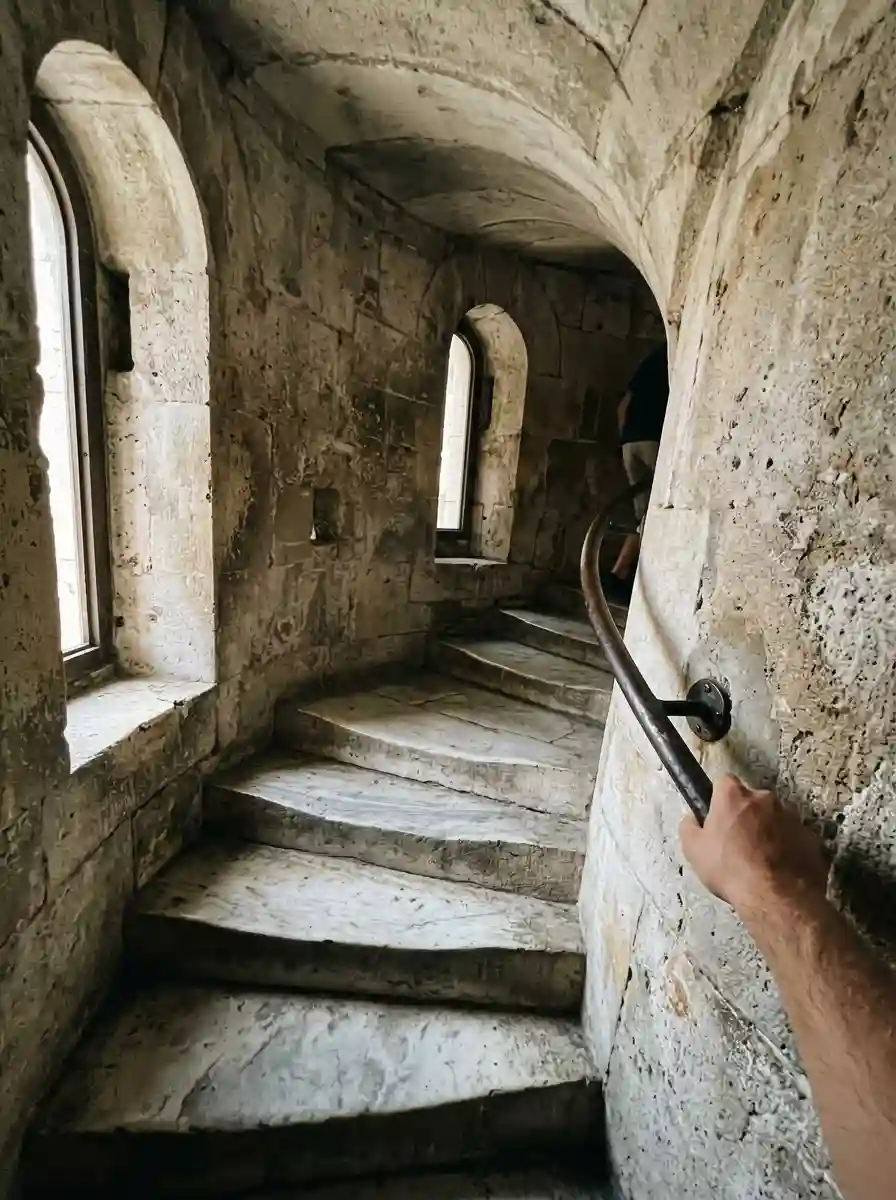
Climbing the tower is a real experience. You walk up a narrow spiral staircase inside the hollow cylinder, and because of the lean, you can feel the angle in your legs. Sources differ on the exact number of steps, with figures of around 251 and 294 both appearing, depending on how steps are counted. What matters is that you get to a gallery with open views over the Piazza and the Pisan countryside.
Key practical points:
- Tower tickets are for a specific time slot, and visitors enter in small groups. You must arrive on time.
- Children under eight are not allowed to climb, and minors must be accompanied by an adult.
- Bags and large items are not permitted inside. There is a luggage deposit area near the Piazza.
- The climb is narrow and steep. It is not suitable for people with severe mobility issues, vertigo or claustrophobia.
- Weather matters. Strong wind or lightning can lead to temporary closures.
Pisa Cathedral (Duomo di Pisa)
Work on the cathedral began in 1064 and it was consecrated in the early twelfth century. It is a masterpiece of Pisan Romanesque style, with striped marble, layered arcades, and a facade that looks almost like lace. Inside, you will find a gilded coffered ceiling, a grand mosaic in the apse, and a carved pulpit by Giovanni Pisano that is among the great works of medieval sculpture.
One famous detail is the bronze lamp hanging in the nave. Legend says the young Galileo watched its swing and began to understand how pendulums work. Again, it is a lovely story and a useful reason to look up.
According to current ticketing information, entry to the cathedral is free with the purchase of a ticket to any other monument on the Piazza, though you still need to collect a free entry ticket. Dress modestly. Shoulders and knees should be covered, and staff do check.
The Baptistery (Battistero di San Giovanni)
The baptistery is the largest in Italy and slightly taller than the tower itself. Construction started in 1152 and continued for many decades, which is why you see both Romanesque and Gothic elements. Inside, a pulpit by Nicola Pisano is the highlight, along with the huge baptismal font.
The best tip for this building is the acoustics. At set times, a staff member sings a few notes inside the dome, and the sound echoes in a long, shimmering way. Many visitors say it is one of their favourite moments in Pisa. You can also climb to an upper gallery for a different view of the Piazza, if it is open.
The Camposanto Monumentale
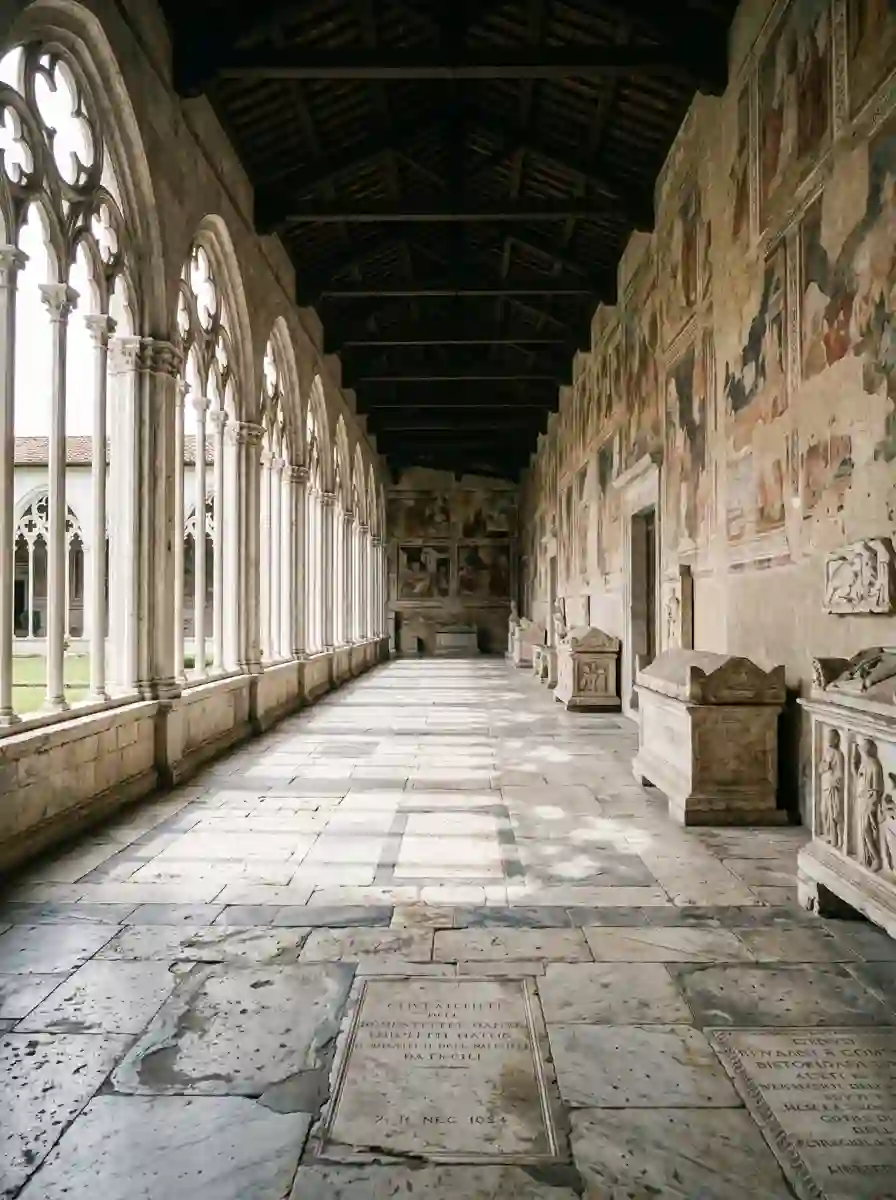
The name means monumental cemetery, which sounds grim, but this long cloister of white marble is one of the most peaceful spaces on the Piazza. It was started in the late thirteenth century, and soil from the Holy Land is said to have been brought here by ships of the Pisan fleet.
The walls were once covered in frescoes. In 1944, during the Second World War, a fire caused by shelling destroyed much of the roof and many paintings. Restoration continues, and what survives, including the dramatic Triumph of Death fresco, is powerful. It is quiet, shaded and often much less crowded than the other monuments, which makes it a great stop on a hot day.
Also Read : Best Time To Visit Denmark For An Unforgettable Scandinavian Adventure
Museums on the Piazza

The Museo dell’Opera del Duomo houses original sculptures and treasures from the cathedral and the other buildings, many of which were replaced outside by copies. The Sinopie Museum displays the large preparatory drawings from beneath the Camposanto frescoes. Both are worth a look if you enjoy art history, but if you are short on time, they are the first things to skip.
Tickets, Prices and Booking Tips for the Piazza dei Miracoli
Ticketing is the part that confuses most visitors, so let’s keep it simple.
Where to buy: The official website is opapisa.it, operated by the Opera della Primaziale Pisana. Third-party sites and platforms also sell tickets, often with a service fee, and some of them make themselves look official. If you value convenience and free cancellation, a reputable platform can be fine, but check the final price against the official one.
Typical prices (verify before you go): A Tower climb ticket has recently been listed at around 20 euros per adult, with a single price and no reductions. A combined ticket that covers the major monuments has been listed at about 27 euros for adults. Prices and ticket categories change, so confirm the current rates on the official website.
Booking in advance: Tower tickets are for a specific date and time, and they sell out in busy periods, especially from spring to early autumn. Book as early as you can. The other monuments are usually easier to visit without a fixed slot, but check the current rules.
Walk-up tickets: There is a ticket office on the Piazza. Opening hours and availability vary by season, and queues can be long in summer.
Screenshot your QR code: Mobile signal can be patchy in the Piazza, and the Tower entrance scanner needs a working code. Save the ticket to your phone or print it.
Time needed: About 30 to 45 minutes for the Tower itself, and 2 to 3 hours for the full Piazza if you visit all the monuments.
Best time of day: Early morning, right after opening, or late afternoon. Midday is the most crowded and hottest.
Smart combinations: If you only want one ticket, choose the Tower plus the cathedral (the cathedral is free with a paid ticket). If you love art and history, the full pass gives better value.
The Famous Photo: How to Do It Without Looking Silly
Everyone wants the pushing-the-tower photo, and there is no shame in it. A few tricks make it work better. Get low to the ground and shoot slightly upwards. Stand much further from the tower than you think, and have your friend stand in the correct position, matching the angle. Take several shots, because small changes in hand position make a big difference. Go early, and the lawn is less crowded.
Things to Do in Pisa Beyond the Leaning Tower
Now comes the part that separates a quick stop from a real visit. These are the places that make Pisa feel like a living city.
Borgo Stretto and the Arcaded Streets
Borgo Stretto is Pisa’s most elegant street, lined with long stone arcades, old pharmacies, pastry shops and cafes. It runs from the river to Piazza Garibaldi, and it is perfect for a slow walk. Stop for a coffee at one of the old cafes and watch the students go by.
Piazza dei Cavalieri
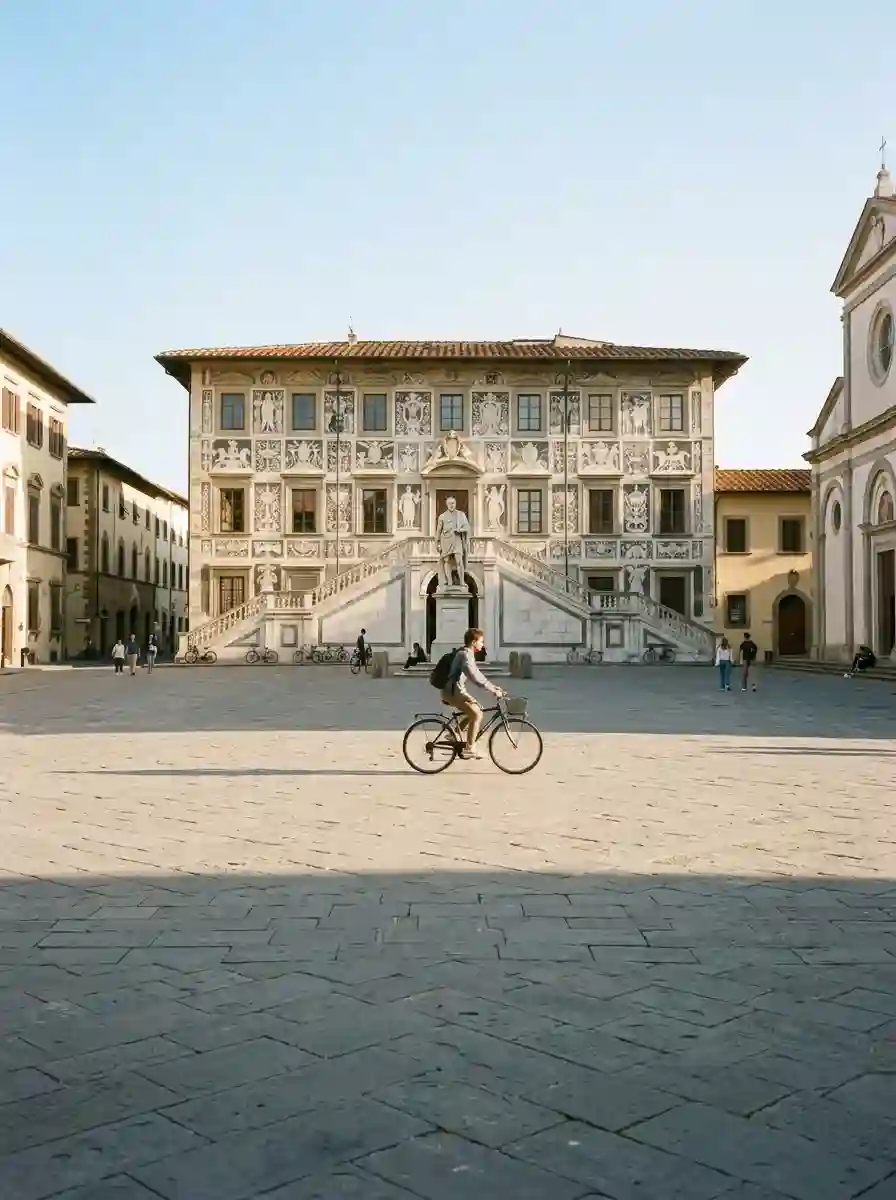
This is arguably the most beautiful square in the city. It was redesigned in the sixteenth century under the Medici family for the Knights of Saint Stephen, a military order. The Palazzo della Carovana, decorated with graffiti-style engravings on its facade, is now the home of the Scuola Normale Superiore. The Church of Santo Stefano dei Cavalieri, nearby, has a striking interior and a ceiling decorated with captured Ottoman banners.
Nearby is the site of the Torre della Fame, the Hunger Tower, which Dante mentions in the Inferno in connection with Count Ugolino. The medieval story is dark, and the tower itself is incorporated into later buildings, but it is a good example of how literature and history overlap in Pisa.
The Arno River and the Lungarni
The Lungarni are the embankments on both sides of the Arno, and they are the city’s living room. In the evening, locals walk, jog and chat along the water. The best light comes at sunset, when the palaces turn gold. Cross the Ponte di Mezzo, the central bridge, for a good view, and stroll toward the Palazzo Blu, a gallery of art exhibitions, on the Lungarno Gambacorti.
Santa Maria della Spina
This tiny Gothic church sits right at the water’s edge and looks like a jewelry box carved from marble. It was built in the early fourteenth century to house a relic said to be a thorn from Christ’s crown. It is small, and visits inside are often limited to exhibitions, but even from the outside it is worth a photo, especially at golden hour.
Museo Nazionale di San Matteo
Often overlooked, this museum holds one of the best collections of medieval Tuscan painting and sculpture outside Florence. If you enjoy art without crowds, it is one of the best-kept secrets in the city.
Museo delle Navi Antiche
The Museum of Ancient Ships is housed in the old Medici arsenal beside the Arno. Archaeologists found well-preserved Roman-era boats during construction work in the late 1990s, and the museum shows how Pisa’s seafaring tradition goes back much further than the medieval republic. It is a good rainy-day option and a quieter alternative to the monuments.
Orto e Giardino Botanico
The university’s botanical garden, founded in the sixteenth century, is one of the oldest of its kind in Europe. It is a green, shady place near the Piazza dei Miracoli, a restful stop on a hot day and a nice break for children.
Piazza delle Vettovaglie and the Local Markets
The market square, with its arcades, has been Pisa’s food hub for centuries. In the morning you can buy fruit, cheese, cured meats and flowers, and in the evening the surrounding streets fill with students drinking aperitivo. It is among the most authentic places in the city.
Must Read : Best Places to See Fall Foliage: 20 Stunning Destinations Worth Planning Your Autumn Around
Keith Haring’s Tuttomondo
Near the station, on the wall of the Sant’Antonio church complex, is a huge, colourful mural by the American artist Keith Haring, painted in 1989. It is one of his last public works in Europe, and it is a great stop if you are walking between the station and the centre.
Ready-Made Pisa Itineraries
Pick the one that matches your time. All of them assume you are comfortable walking, and you can swap pieces in and out.
Half-Day Itinerary (Layover or Quick Stop)
- Arrive by 9:00. If you came by train, walk from Pisa Centrale through the centre, crossing the Arno and passing Borgo Stretto, or take a local bus if you are short on time.
- 9:30 to 11:30. Piazza dei Miracoli. Climb the tower if you have a timed ticket, then step inside the cathedral and, if time allows, the baptistery.
- 11:30 to 12:30. Walk down toward Piazza dei Cavalieri for a quick look at the square.
- 12:30 to 14:00. Lunch near Piazza delle Vettovaglie. Try cecina and a plate of local pasta.
- 14:00. Head back to the station or airport with a comfortable margin. Always leave extra time on travel days.
One-Day Itinerary (The Classic)

- 8:30. Coffee and a pastry on Borgo Stretto.
- 9:30. Piazza dei Miracoli: tower climb, cathedral, baptistery, and the Camposanto. Take your time with the photos.
- 12:30. Lunch in the centre. Ask for the local dishes listed later in this guide.
- 14:30. Piazza dei Cavalieri and the Scuola Normale, then a stop at the Church of Santo Stefano.
- 16:00. Walk to the Arno, see Santa Maria della Spina, and cross the Ponte di Mezzo.
- 17:30. Gelato and a slow stroll along the Lungarni.
- 19:30. Dinner in the Vettovaglie area, followed by an evening walk back to your hotel or train.
Two-Day Itinerary (Our Favourite Pace)
Day 1: The Highlights
- Early start at the Piazza dei Miracoli with a pre-booked tower slot, then the cathedral, baptistery and Camposanto.
- Lunch at a local trattoria.
- Afternoon at the Museo dell’Opera del Duomo or the botanical garden, depending on the weather.
- Late afternoon coffee and a walk on Borgo Stretto.
- Sunset on the Lungarni and dinner in the old town.
Day 2: The Local Side
- Morning at Piazza delle Vettovaglie, picking up fruit, bread and cheese for a picnic or breakfast.
- Visit the Museo Nazionale di San Matteo and the Museo delle Navi Antiche.
- Lunch near the river.
- Afternoon trip to San Rossore park or the sea at Marina di Pisa, or a train ride to Lucca for a half-day visit.
- Evening aperitivo with the students around Piazza delle Vettovaglie or along the river.
Three-Day Itinerary (Pisa as a Base)
Follow the two-day plan, and use the third day for a longer excursion. Lucca, Florence, or Cinque Terre via La Spezia all work as full-day trips. If you prefer to stay local, spend the day at the coast and in San Rossore regional park, then enjoy a long dinner back in town.
Day Trips From Pisa
Pisa is a convenient hub, and the transport links are one of its biggest strengths. Here are the trips that give the best return on your time.
Lucca (About 30 Minutes by Train)
Lucca is a beautifully preserved walled town, and one of the best easy trips from Pisa. You can walk or cycle along the top of the Renaissance walls, which are wide enough to be a tree-lined park. Visit Piazza dell’Anfiteatro, built on the shape of a Roman amphitheatre, and climb the Guinigi Tower, which has trees growing on its roof. It is slower, quieter and more intimate than Pisa, and it makes a lovely pairing.
Florence (About 1 Hour to 1 Hour 20 Minutes by Train)
Florence is the obvious choice, but it is a big city that needs more than a rushed day. If you do go, pick two or three priorities in advance, book the Uffizi or Accademia tickets ahead, and be ready to move quickly. Many travellers prefer to stay in Pisa and visit Florence for a long day, because accommodation is generally more affordable.
Cinque Terre (About 1.5 to 2 Hours)
Take a train to La Spezia and change for the local line to the five villages. It is a long day, but doable, and the coastal scenery is spectacular. Go in spring or autumn, wear sturdy shoes, and check trail conditions before you head out, since some paths can be closed.
Siena and San Gimignano
These are better suited to a car or an organised tour, since public transport takes longer. Siena has the shell-shaped Piazza del Campo and a magnificent cathedral. San Gimignano is a hill town known for its medieval towers.
Volterra, Livorno and San Miniato
Volterra is an Etruscan and medieval hill town with alabaster workshops and wonderful views. Livorno is a gritty port city with a lively market and the seafood stew called cacciucco. San Miniato is known for its truffles, particularly in the autumn.
San Rossore, Marina di Pisa and Tirrenia
The San Rossore Regional Park is a large natural reserve of pine forest, marshes and beaches, once a royal estate. You can hire a bike or join a guided walk. Marina di Pisa and Tirrenia are the nearest seaside spots, with beach clubs and seafood restaurants, and they are very popular with locals on hot summer weekends.
Carrara and the Marble Quarries
For something different, visit the Apuan Alps near Carrara, where marble has been quarried since Roman times. Guided jeep tours go into the working quarries, and the white landscape is memorable. This is the same type of stone that Michelangelo is said to have loved.
Certosa di Calci
This large Carthusian monastery is only a short drive or bus ride from Pisa, and it houses the university’s natural history museum. It is peaceful and impressive, and often missed by visitors.
What to Eat and Drink in Pisa
Pisa’s food is rooted in the surrounding Tuscan countryside and the nearby sea. It is simple, honest and mostly inexpensive. Here is what to look for.
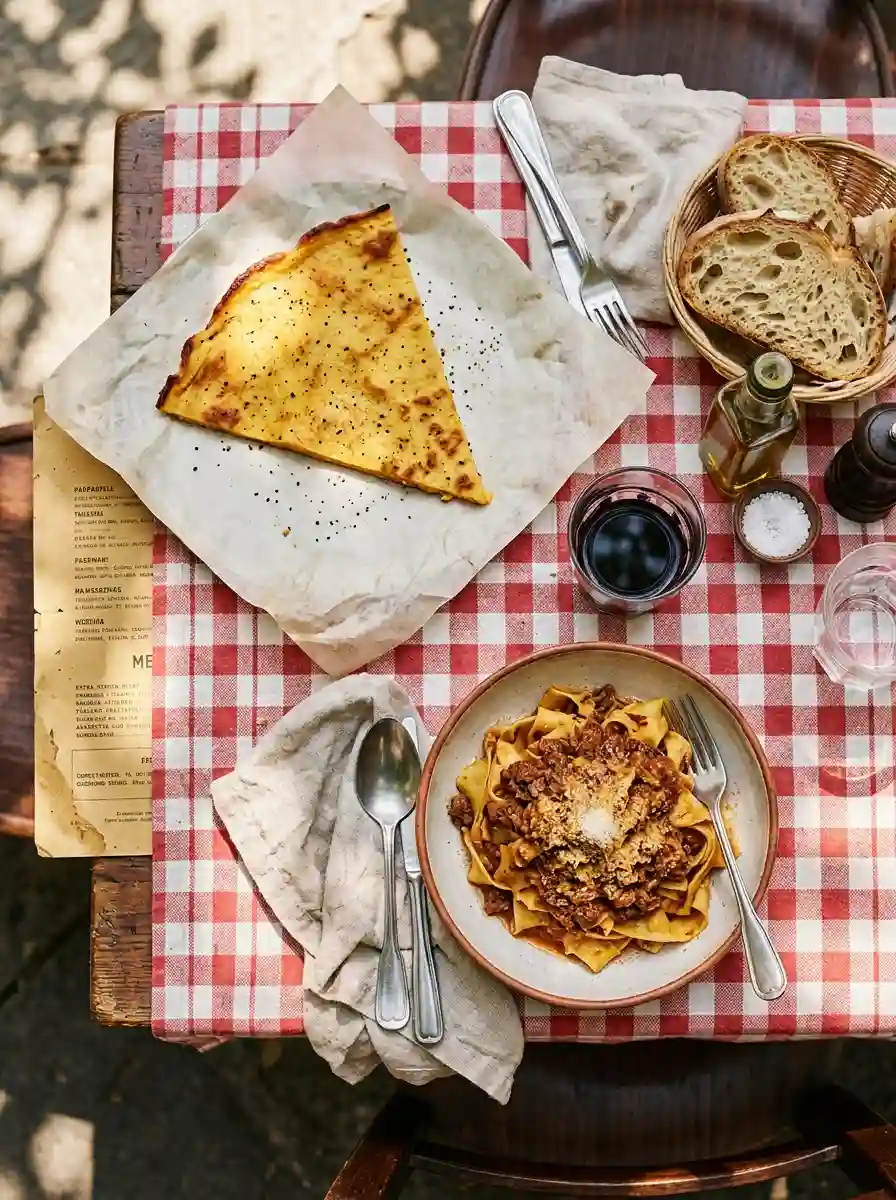
Cecina (or torta di ceci): A thin, crisp-edged pancake made from chickpea flour, water, olive oil and salt, baked in a wood-fired oven. It is the city’s signature street food. Locals often eat it hot, sprinkled with black pepper, or tucked inside a bread roll. Try it at a traditional cecinaio, and have it for lunch or as an afternoon snack.
Bordatino: A thick soup of cornmeal and kale or black cabbage, often cooked with beans. It is rustic, warming and perfect in winter.
Baccalà alla pisana: Salted cod prepared with tomatoes, garlic and sometimes chard or other vegetables. It reflects the city’s maritime past.
Zuppa pisana and other soups: Tuscan bread-based soups and bean soups are everywhere, especially in cooler months.
Pasta with wild boar or rabbit ragu: Look for pappardelle with cinghiale. It is a classic across Tuscany and often very good here.
Fish and seafood: Because the coast is so close, seafood is a serious option. Fried small fish, grilled catch of the day, and seafood pasta are all worth trying near the Arno and the nearby coast.
Pan co’ santi: A sweet bread with raisins, walnuts and sometimes pepper, traditionally made around All Saints’ Day in early November.
Torta co’ bischeri: A local pie filled with chocolate, rice and pine nuts, associated with the hills near Pisa.
Gelato: Pisa has plenty of gelaterias. The best ones tend to be small, with natural colours and short flavour lists, and they are usually located away from the Piazza dei Miracoli.
Coffee and aperitivo: Italians drink coffee standing at the bar, and it is cheaper than sitting at a table. In the evening, join the aperitivo ritual, where a drink usually comes with snacks.
Wine: Tuscany is wine country. Look for local reds from the Colline Pisane area and the nearby coastal vineyards, along with the well-known Chianti. Ask your waiter for a house wine, which is often very good value.
Where to Eat: Practical Tips
- Avoid restaurants with big picture menus and touts right on the Piazza dei Miracoli. Walk five or ten minutes away and prices drop while quality rises.
- Look for places full of Italians, especially at lunch.
- Many restaurants close between lunch and dinner. Dinner usually begins around 19:30.
- Check the cover charge, called the coperto, which is normal in Italy and appears on the bill. Service charges vary, and tipping is not obligatory.
- Reserve for dinner on weekends and during festivals.
Where to Stay in Pisa
Pisa has a smaller hotel selection than Florence, which is another reason many people treat it as a day trip. That also means good places can book up during peak periods, so reserve ahead. Here are the main areas.
Near Piazza dei Miracoli: The best choice if you want to see the monuments early or late, and enjoy the quiet after the day trippers leave. Expect a mix of boutique hotels and guesthouses. A room with a tower view is a special treat but usually costs more.
Historic centre (Borgo Stretto, Piazza dei Cavalieri, Lungarni): Our favourite area for first-timers. You have restaurants, shops and river views, and it is easy to walk to the Piazza and the station.
Near Pisa Centrale station: Practical and often cheaper, with excellent train access. It is less atmospheric, but convenient for early departures and day trips.
Near the airport: Good for early flights. You will have to take transport into the centre, so this is a functional option rather than a charming one.
Outside the city: Agriturismi, which are working farm stays, and villas in the nearby hills offer a quieter experience. They usually require a car.
Budget options: Hostels, simple guesthouses, campsites at the coast, and student-oriented accommodation. Prices rise sharply during festivals.
Tip: Many Italian cities charge a small tourist tax per person per night, usually paid directly at the hotel. Ask about it when you book, so there are no surprises.
Festivals and Events in Pisa
Luminara di San Ranieri (16 June): The best-known event. On the evening before the feast of Pisa’s patron saint, the buildings along the Arno are outlined with thousands of small lights, and the river takes on a magical glow. It ends with fireworks. Arrive early for a good viewing spot and book hotels well in advance.
Regatta di San Ranieri (17 June): Rowing teams from the four traditional districts compete on the Arno in historic costumes.
Gioco del Ponte (Last Saturday of June): A historical reenactment on the Ponte di Mezzo, with a procession in Renaissance costume and a tug-of-war style contest between the two halves of the city.
Capodanno Pisano (25 March): A local New Year tradition, dating from when Pisa began its year on this date. It is not a huge event for visitors, but it is a delightful local custom.
Christmas season: Smaller than in Florence, but pleasant, with lights, a few markets and warm seasonal food.
If you plan your trip around a festival, remember that prices go up and rooms disappear quickly, and some events are subject to changes in date or format, so check the official local calendar.
Budget, Costs and Money Tips
Pisa is generally more affordable than Florence or Venice, though prices vary widely by season. The figures below are rough guides only, and you should check current prices before travelling.
- Tower ticket: Around 20 euros per adult.
- Full Piazza pass: Around 27 euros per adult.
- Coffee at the bar: About 1.20 to 1.80 euros standing.
- Cecina slice or a sandwich: A few euros.
- Casual lunch with pasta: About 10 to 18 euros.
- Dinner with wine: About 25 to 45 euros per person in a normal trattoria.
- Local bus ride: A small fare, usually just over one euro.
- Hotels: Anywhere from budget rooms to premium boutique stays, with the steepest prices in summer and during festivals.
Money-saving tips:
- Book the tower and any combined ticket on the official site to avoid extra fees.
- Eat a main meal away from the Piazza dei Miracoli.
- Drink coffee at the bar, not at a table.
- Fill a bottle with tap water. It is safe in Italy and there are public fountains.
- Travel in shoulder season, when flights and hotels are cheaper.
Payments: Cards are widely accepted, but keep a little cash for small cafes, markets and tobacconist shops. ATMs are common. Use machines attached to banks, and decline any offer of dynamic currency conversion when asked, since it usually gives a worse rate.
Practical Tips for First-Time Visitors
Learn from the common mistakes:
- Showing up without a tower ticket in summer. Slots sell out. Book ahead.
- Buying from lookalike websites. Check the web address, and compare the price with the official site.
- Wearing sandals on a hot cobblestone day without a plan. Bring comfortable, supportive shoes.
- Arriving at midday. It is the hottest and most crowded time. Come early or late.
- Not leaving buffer time before flights and trains. Strikes, delays and queues happen in Italy. Add extra time.
- Eating at the first restaurant you see. Walk a few streets away.
Safety: Pisa is generally a safe city, but pickpockets operate around stations, buses and crowded tourist spots. Keep your phone and wallet in front pockets or a zipped bag, and be cautious of anyone who approaches you with a petition, a bracelet or an unexpected favour. Street sellers on the Piazza can be persistent, and a polite but firm no is enough. The area near the station can feel rough late at night, so plan your arrival and departure times accordingly.
Etiquette: Greet shop staff with a buongiorno or buonasera. Cover shoulders and knees in churches. Avoid sitting on monument steps and walls, and keep off the lawn of the Piazza unless it is open to the public, since signs and rules can change.
Useful Italian phrases:
- Buongiorno (good morning), buonasera (good evening)
- Per favore (please), grazie (thank you)
- Un caffè, per favore (a coffee, please)
- Il conto, per favore (the bill, please)
- Dov’è la stazione? (where is the station?)
Packing list:
- Comfortable walking shoes
- A hat, sunscreen and a refillable water bottle in summer
- A light rain jacket or umbrella in autumn and spring
- A scarf or light layer for churches
- A portable charger, since you will use your phone for tickets and maps
- A European plug adapter if you come from outside Europe
Connectivity: Free wifi is available in some cafes and hotels. An eSIM or local SIM is helpful for maps, tickets and translation.
Opening hours: Many museums close on Mondays, and shops often shut for a long lunch break. Check hours before you go, especially on Sundays and public holidays
Read Must : 10 Best Places to Travel with Toddlers (Tried, Tested & Tantrum-Approved)
Pisa for Different Kinds of Travellers
Families with children: Pisa is easy and friendly. Kids tend to love the tower and the open lawn, but remember that children under eight cannot climb. The botanical garden, the ancient ships museum and gelato breaks keep little ones happy. A stroller works on the Piazza, though the cobbled streets will test it.
Couples: Plan a sunset walk on the Lungarni, a candlelit dinner near the market, and a quiet morning at the Camposanto. The Luminara is especially romantic if you can time your trip around it.
Solo travellers: The city feels safe and sociable, especially around the university district. Aperitivo is an easy way to meet people, and the train links make day trips simple.
Budget travellers: Stay near the station, eat cecina and market lunches, use the free sights, and visit outside the summer peak.
Art and history lovers: Allow a full day for the Piazza with its museums, and spend extra time at San Matteo and the Camposanto. Add Lucca for more medieval architecture.
Rainy day plan: Head to the cathedral, the Museo dell’Opera del Duomo, San Matteo, the ancient ships museum and a long lunch. Keep the tower climb for a clearer day if your ticket allows flexibility.
Accessibility: The historic centre is flat, which helps, but uneven paving and crowds can be difficult. Check the official site for the latest access information and discounted entry details.
Frequently Asked Questions About Visiting Pisa
Is Pisa worth visiting?
Yes. The Piazza dei Miracoli is one of the great sights of Europe, and the city itself is pleasant, affordable and walkable. It is also an easy gateway to the rest of Tuscany.
How many days do you need in Pisa?
One full day is enough for the highlights. Two days gives you time to enjoy the quieter sides of the city and avoid the crowds.
Is Pisa better as a day trip or an overnight stay?
If you only want the tower, a day trip works. If you want to enjoy the Piazza in the quiet hours, explore the river and eat well, stay at least one night.
How much does it cost to climb the Leaning Tower?
Recent listings show about 20 euros per adult, with combined tickets costing more. Check opapisa.it for the current price.
How long does it take to visit the Leaning Tower?
Plan about 30 to 45 minutes for the climb, and 2 to 3 hours if you also visit the cathedral, baptistery and Camposanto.
How far is Pisa from Florence?
About 80 to 90 kilometres. The train takes about an hour or a little more, and driving takes around an hour and a half.
How do I get from pisa airport to the city center ?
Use the Pisa Mover shuttle to the station, a regional train, or a taxi. The airport is very close to the centre.
Does the tower really lean more every year?
No. After the restoration work completed in the early 2000s, the lean was reduced and stabilised, and experts have said it is safe for a very long time.
Final Thoughts: Is Pisa Worth Your Time?
Pisa is a city that rewards curiosity. If you arrive expecting only a tilted tower, you will get exactly that, and it will be wonderful. But if you give the city a little more time, you will find a river lit by evening light, a square of knights and scholars, a plate of cecina still warm from the oven, and a quieter Piazza dei Miracoli after the crowds have gone.
Use this Pisa travel guide as a starting point, adjust it to your own pace, and remember to verify tickets, hours and transport details before you travel. Book the tower early, wear comfortable shoes, stay one night if you can, and leave room in your plan for the unexpected. That is where the best travel memories usually come from.
Buon viaggio!